
FUTURE FORUM RECAP: The Use of AI to Advance Healthcare
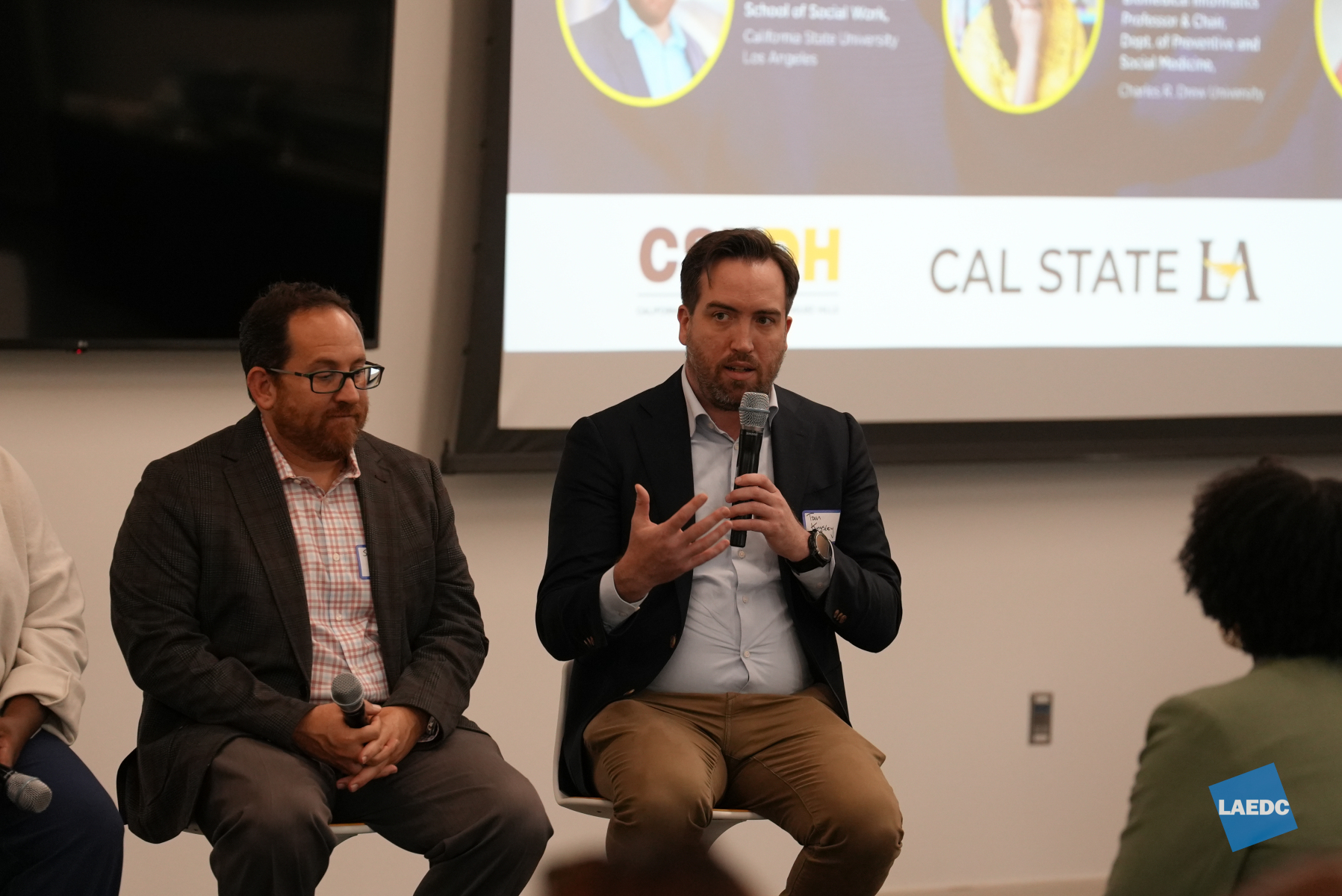
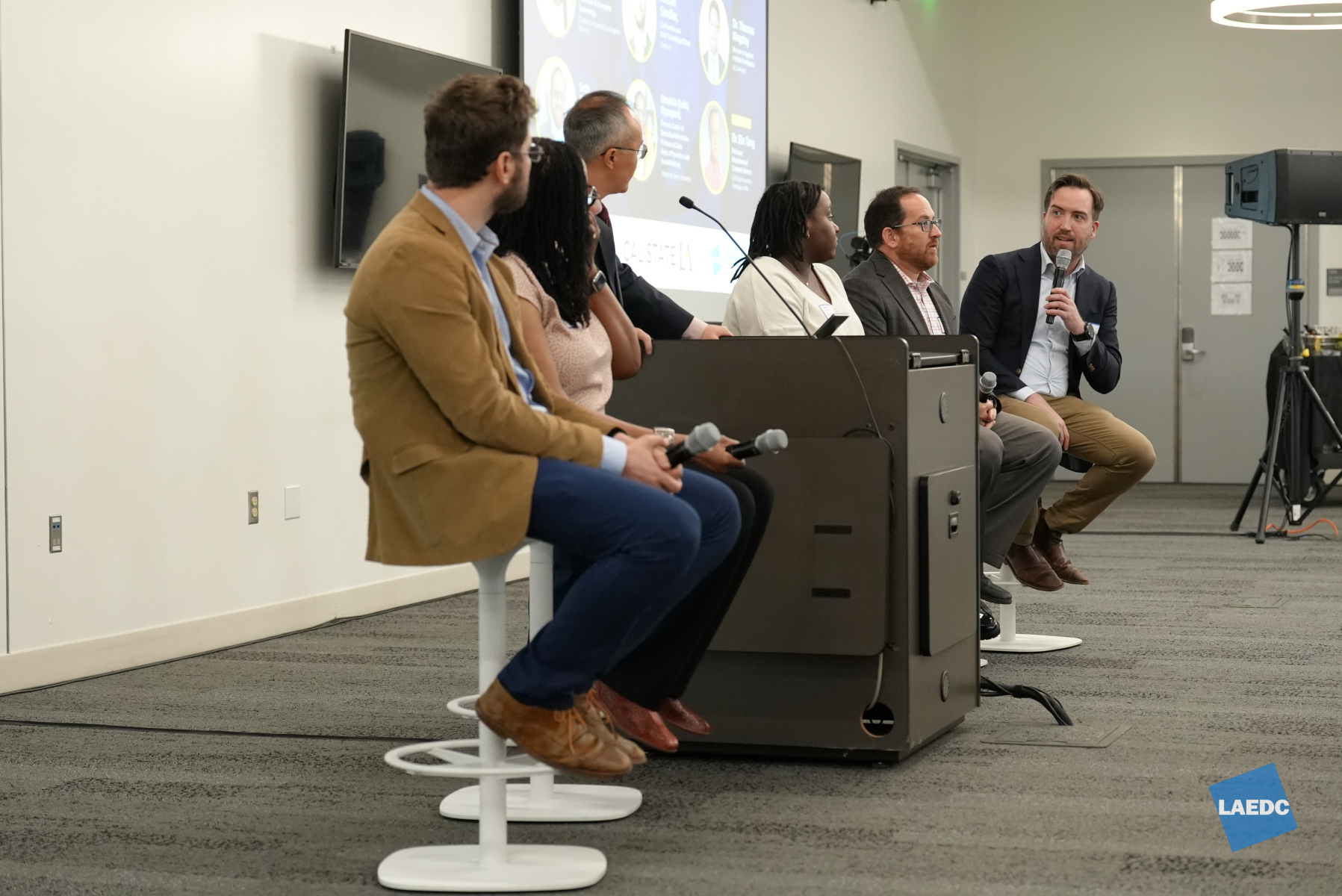
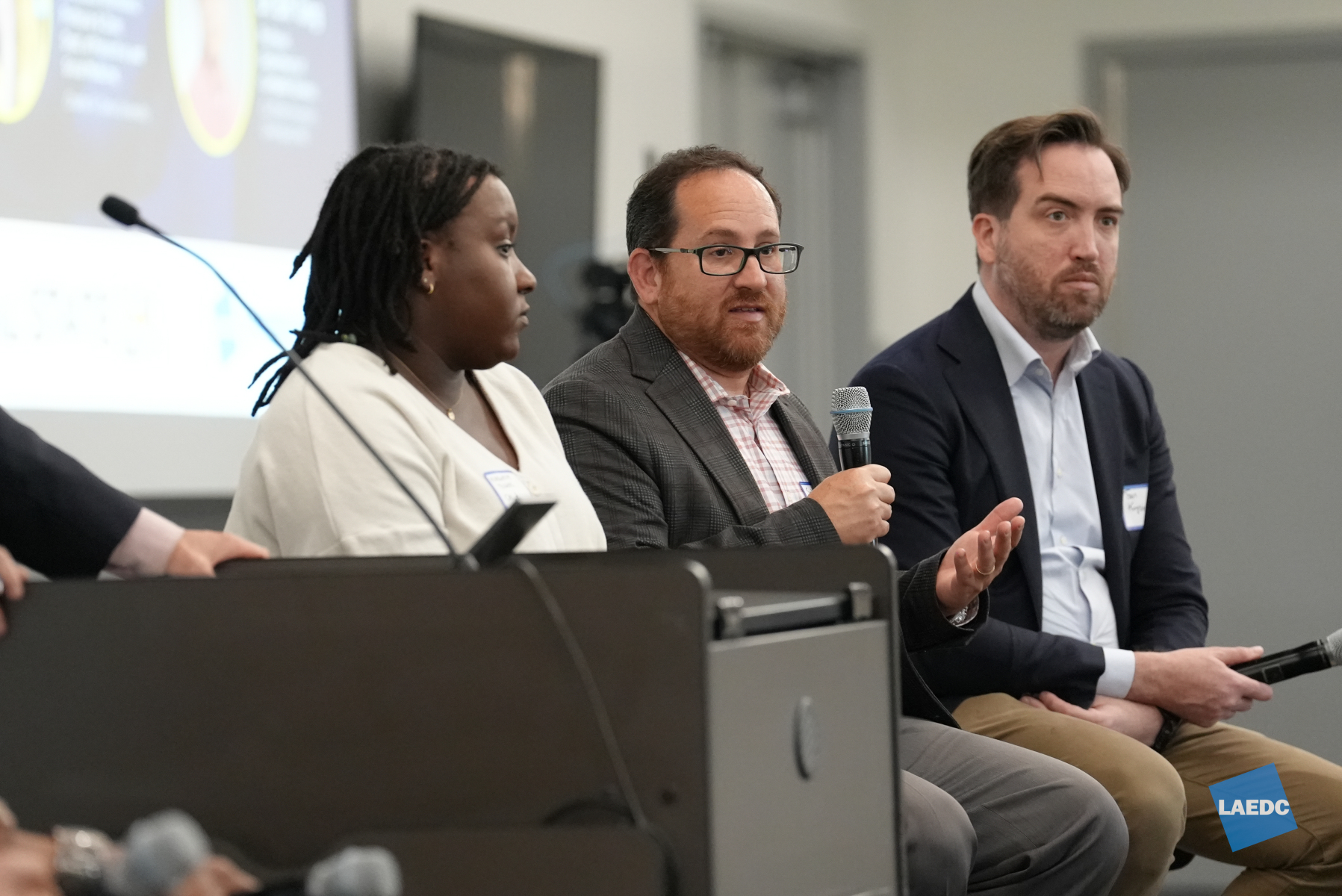
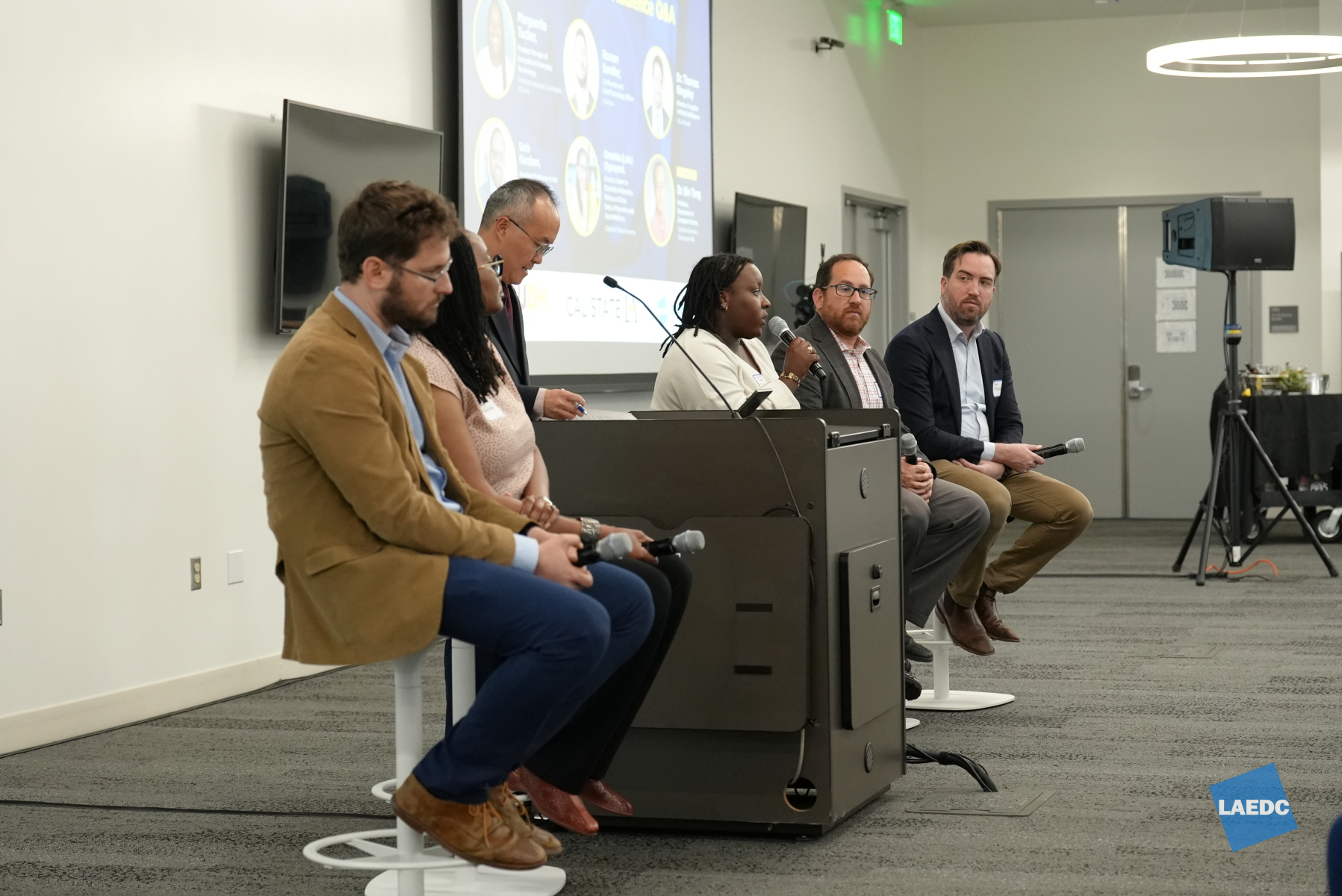
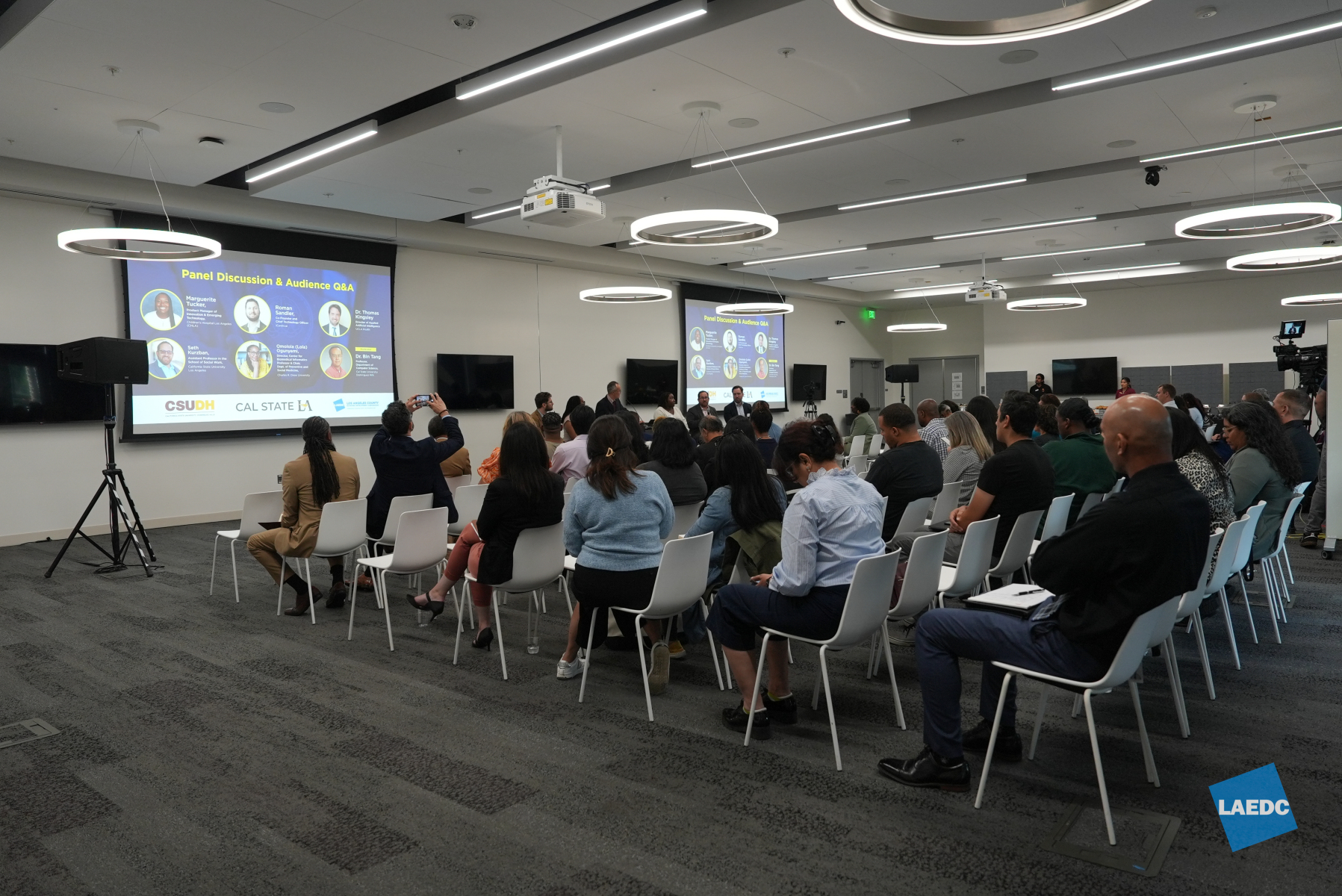
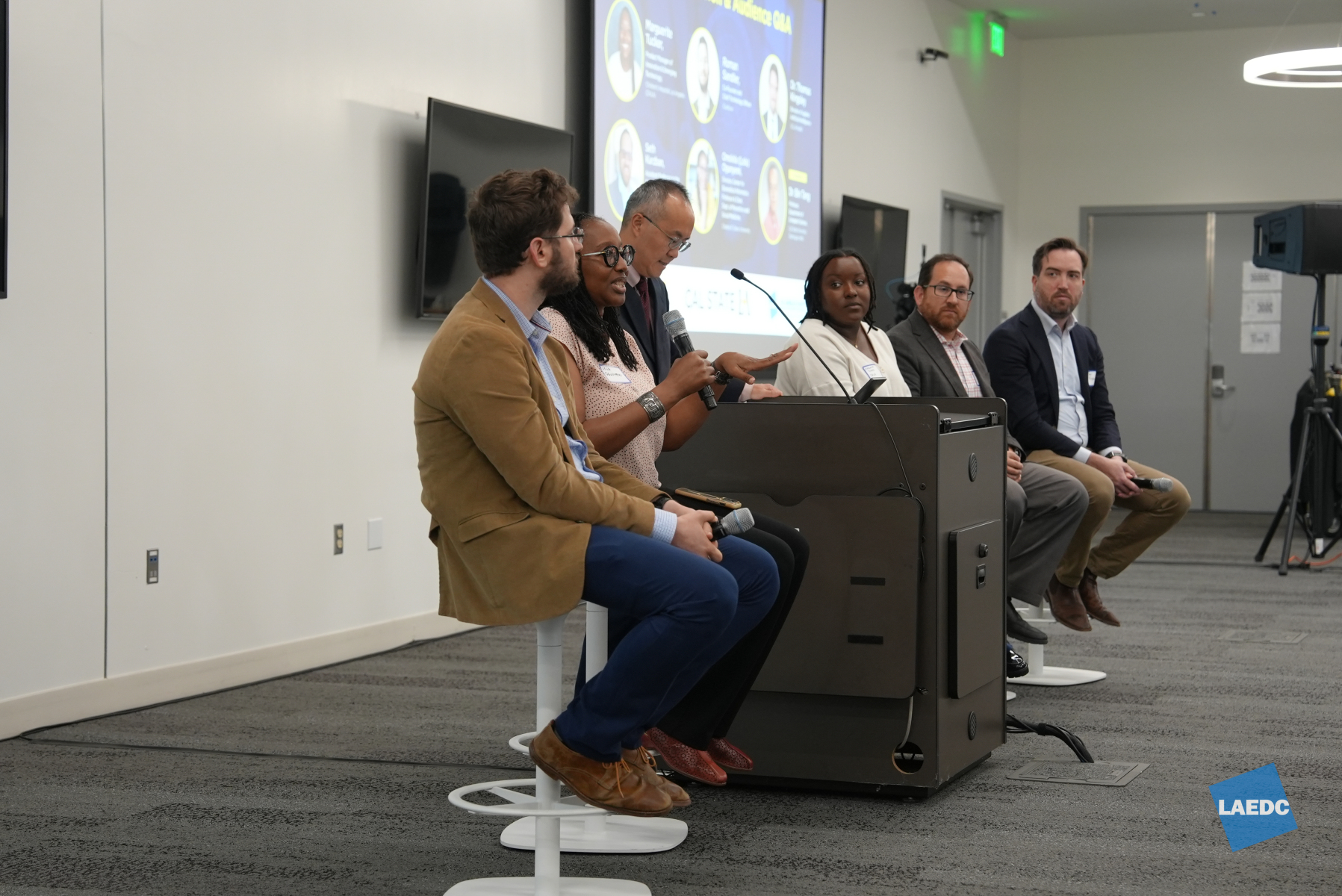
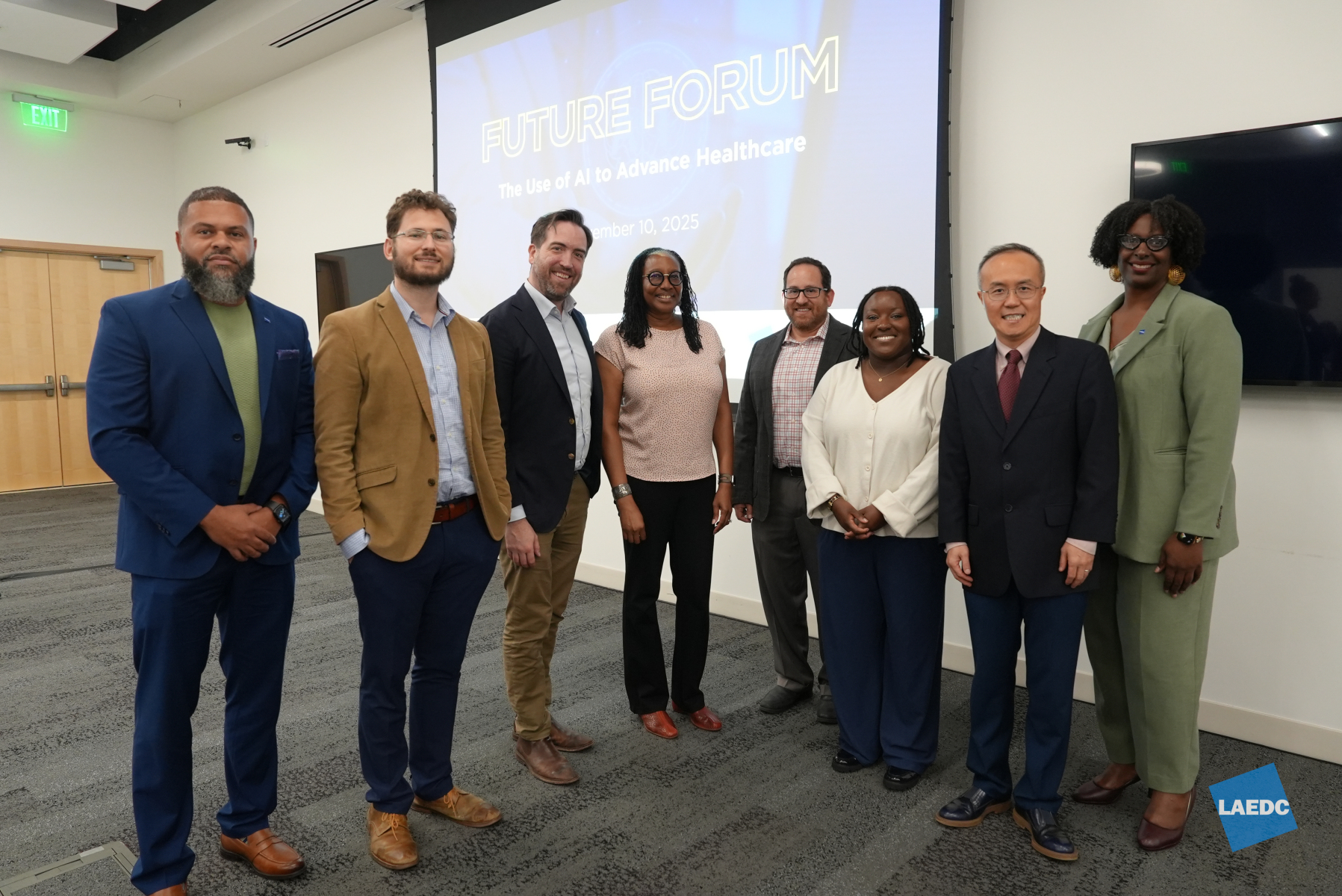
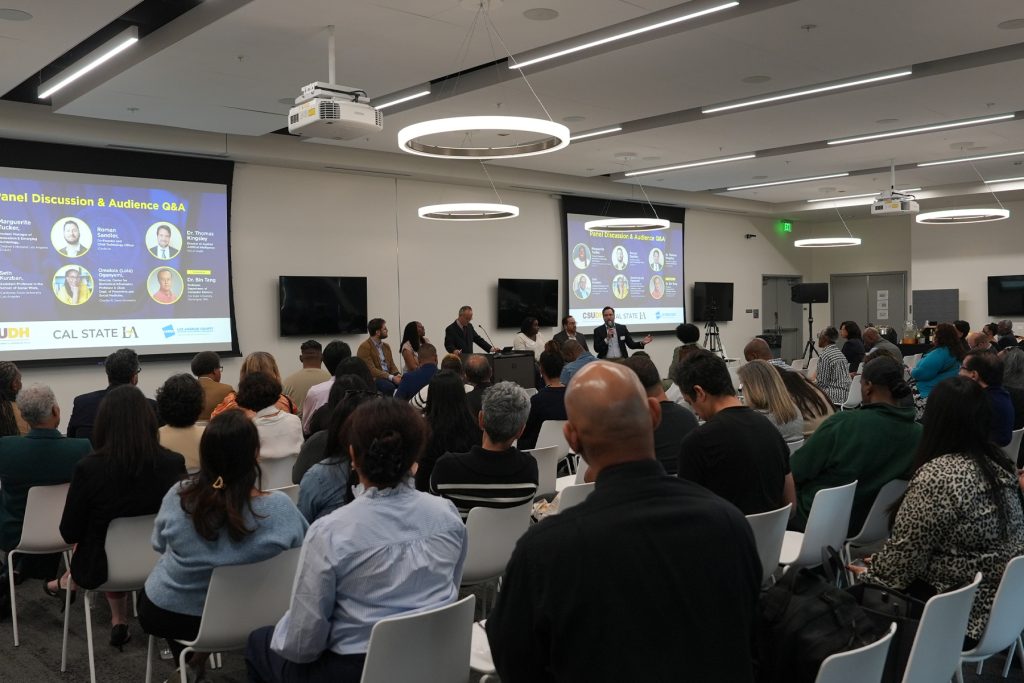
The LAEDC Future Forum titled “The Future of Advancing Healthcare with AI” convened a diverse group of healthcare providers, academic leaders, AI experts, and workforce development partners to explore the transformative potential of artificial intelligence (AI) in healthcare, particularly within Los Angeles County’s vast and diverse ecosystem. The event emphasized the dual nature of AI—its tremendous promise to improve healthcare delivery, education, and equity, as well as the potential risks related to ethics, trust, access, and exacerbating existing disparities.
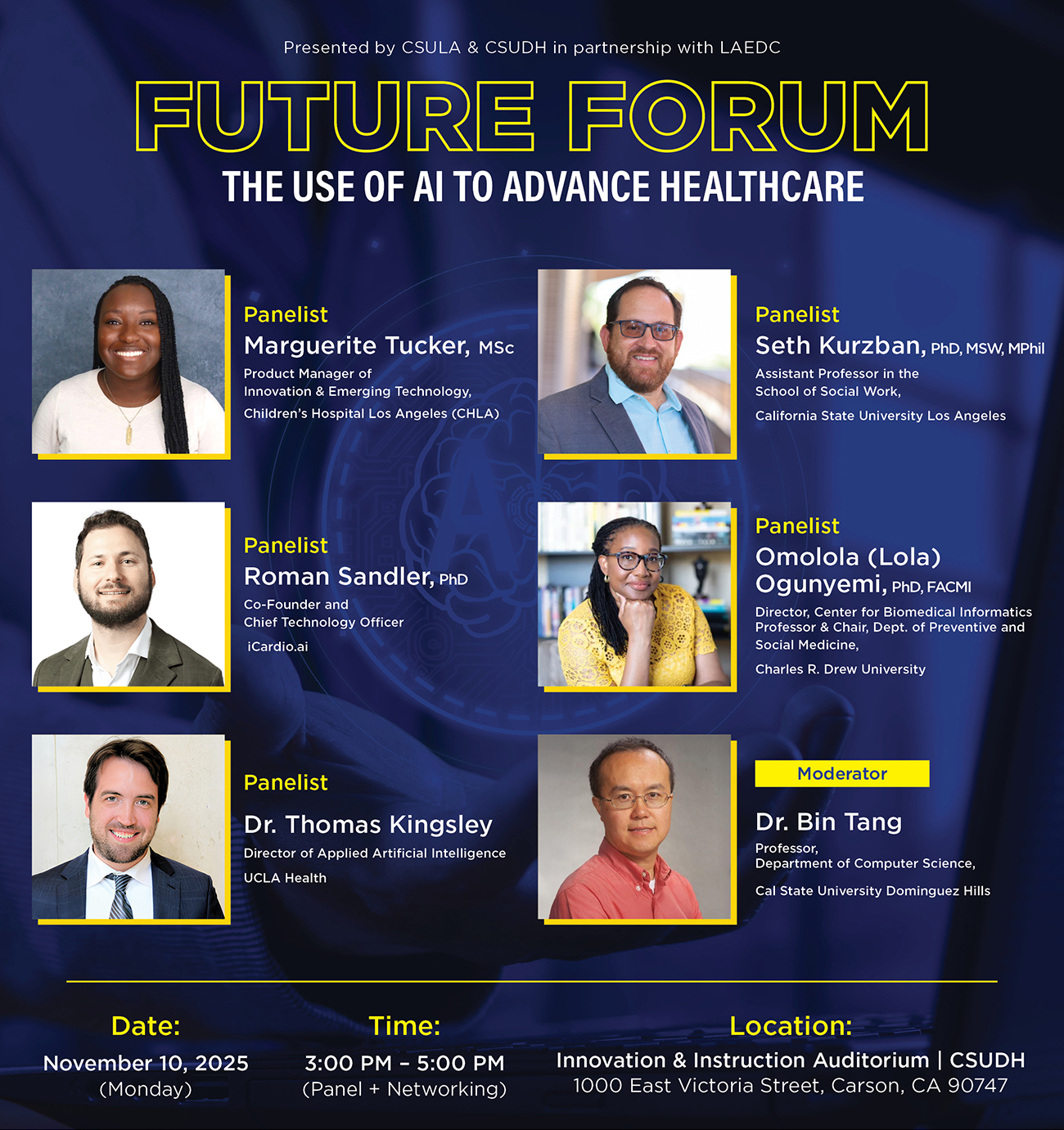
Speakers & Panel
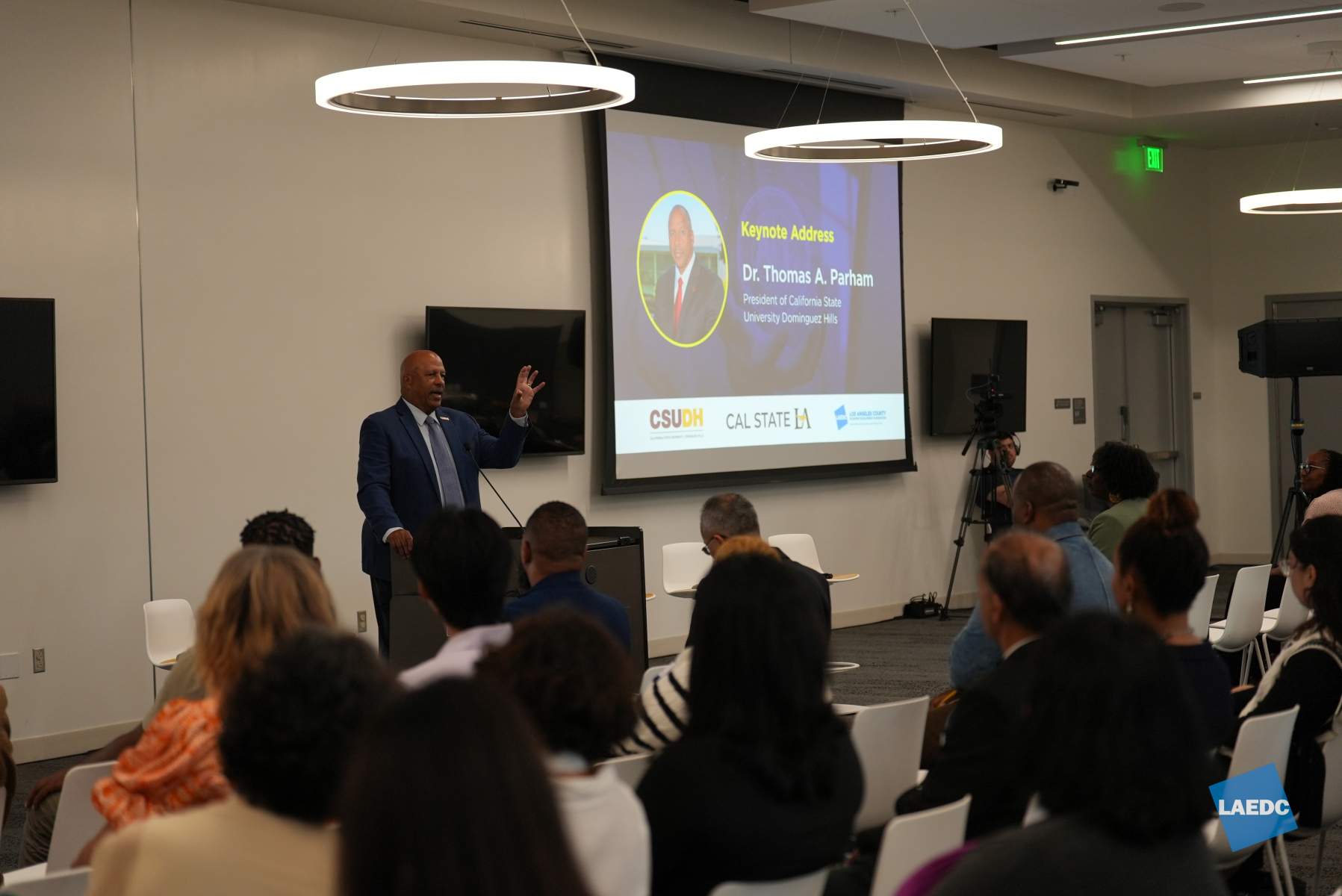
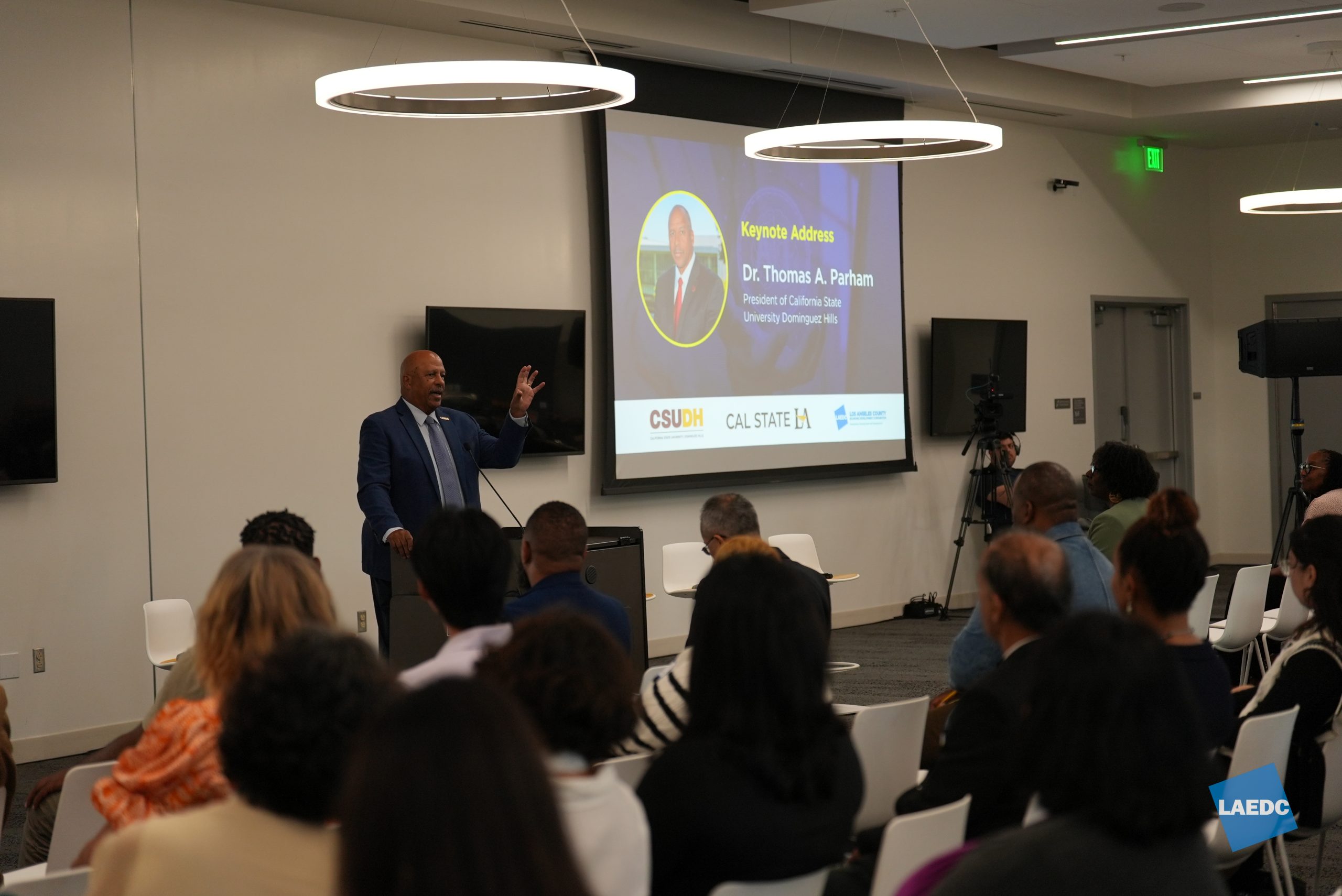
Keynote Speaker:
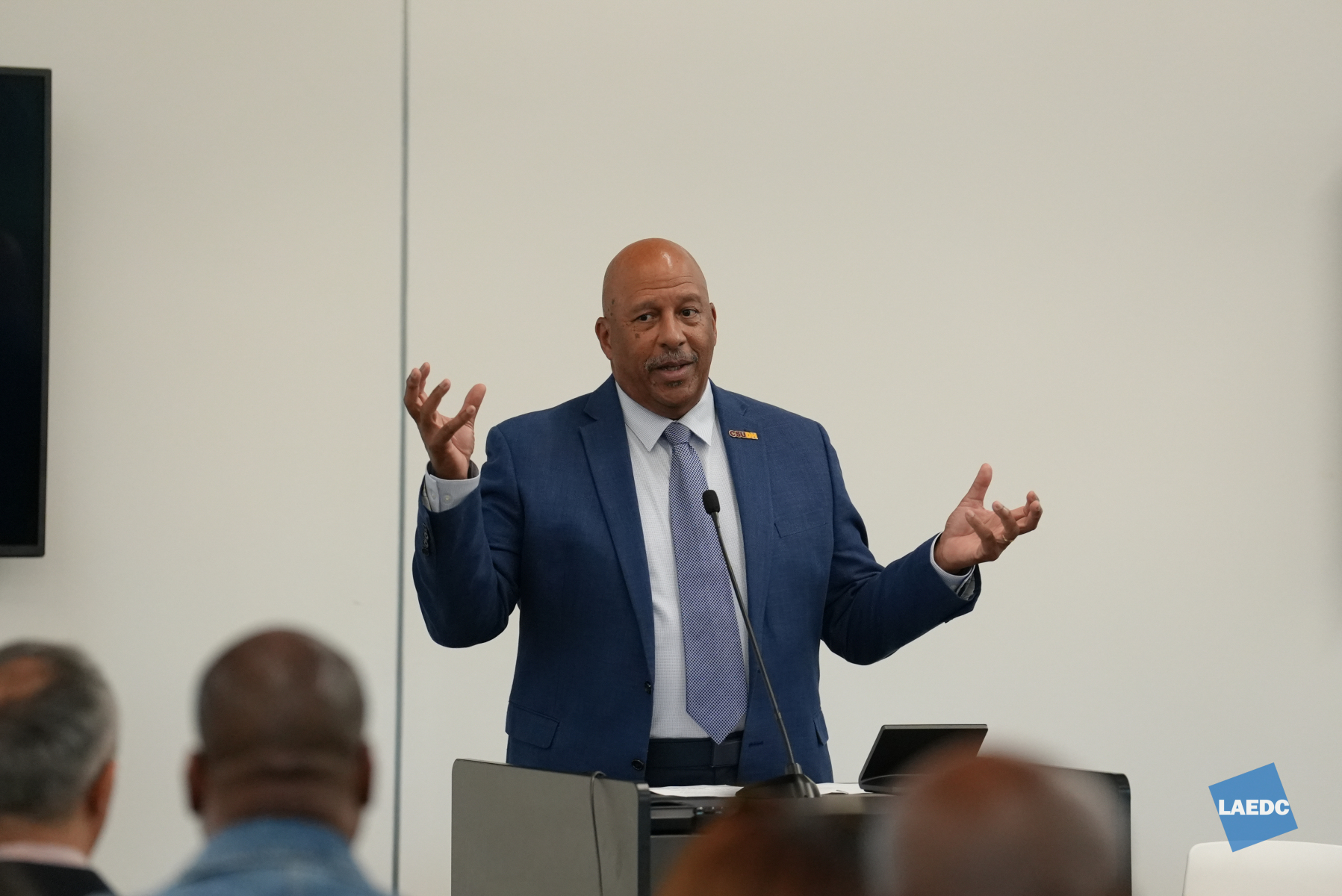
Dr. Thomas A. Parham
President of California State University Dominguez
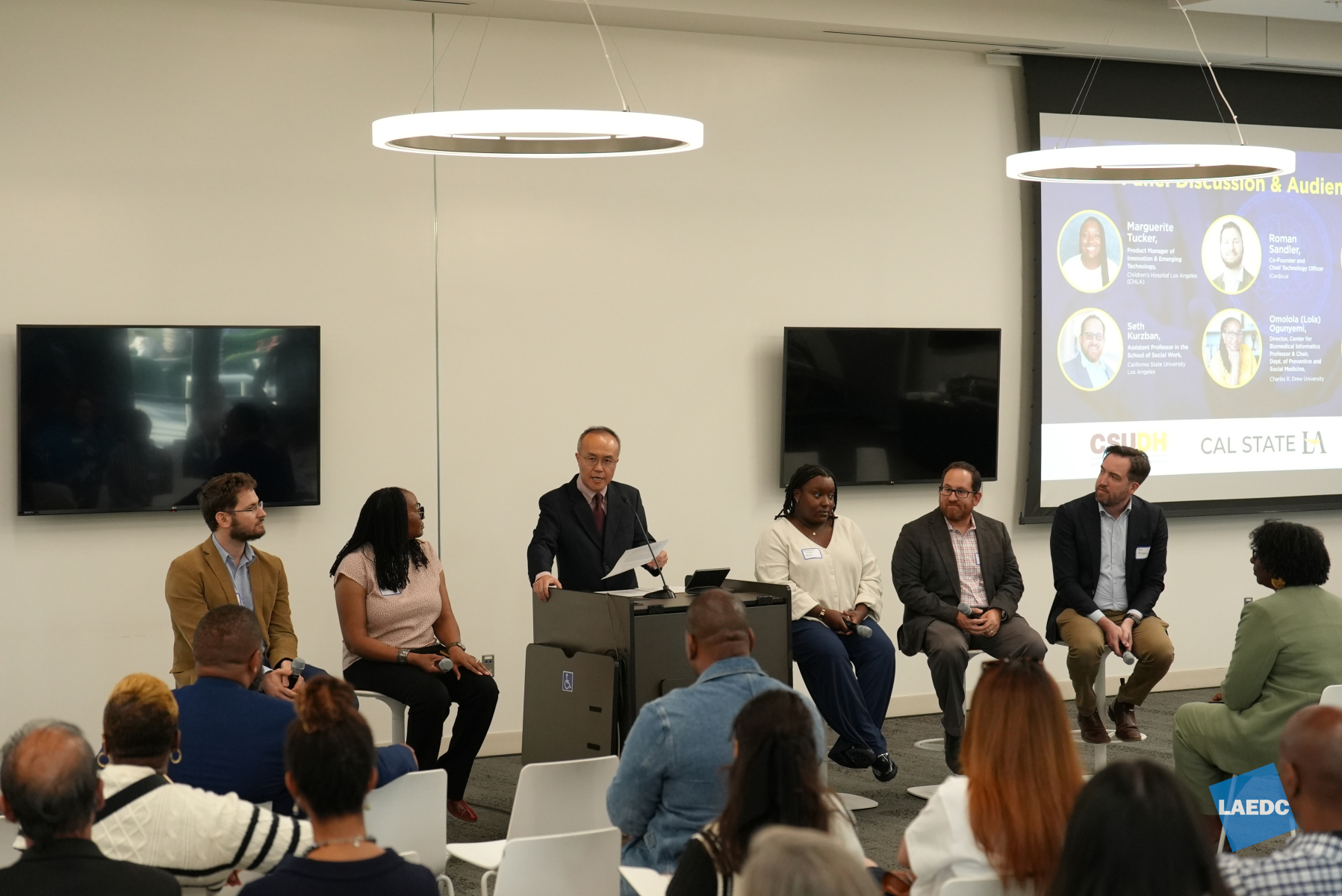
Panelist:
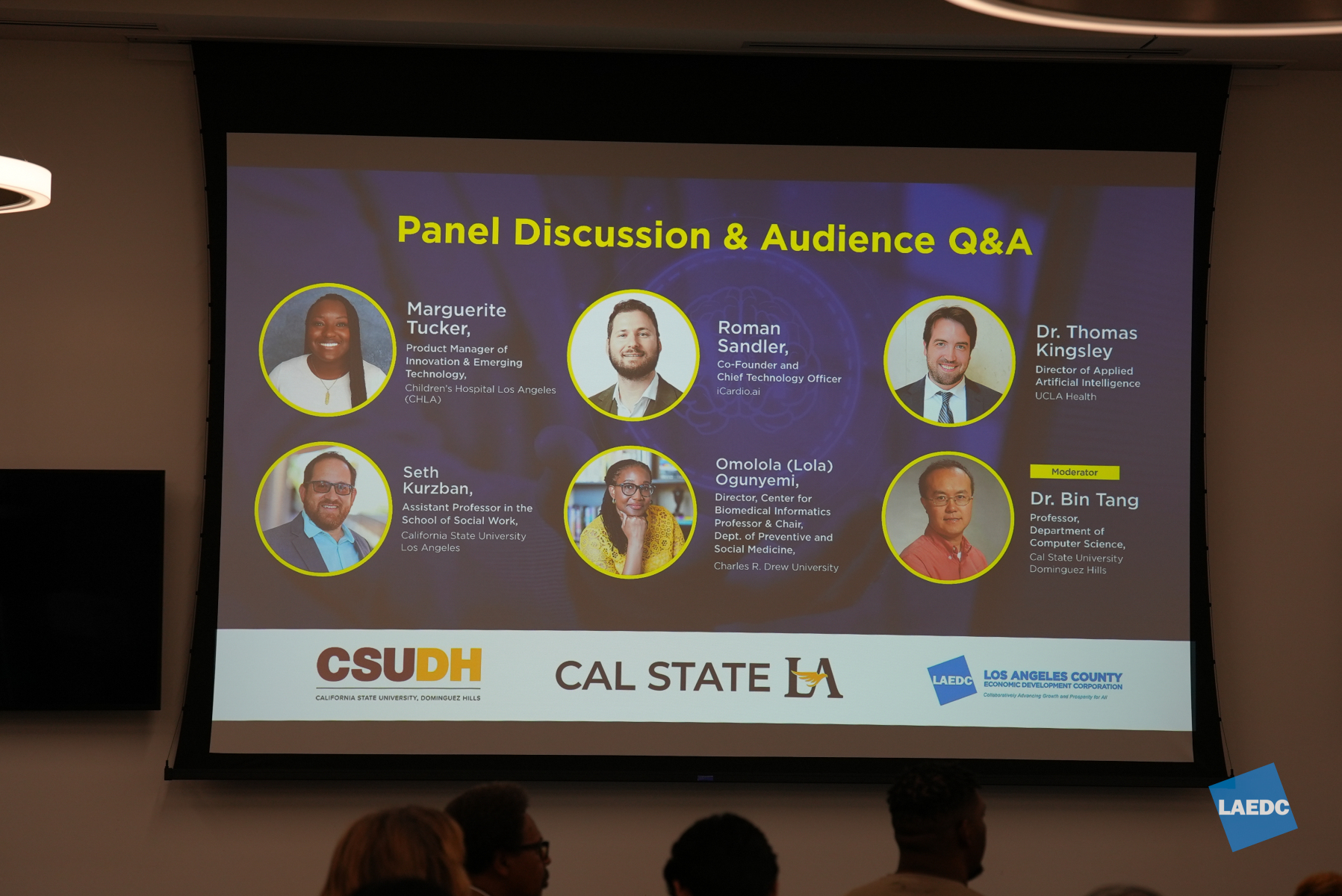
Marguerite Tucker, MSc
Roman Sandler, PhD
Dr. Thomas Kingsley
Seth Kurzban, PhD, MSW, MPhil
Omolola (Lola) Ogunyemi, PhD, FACMI
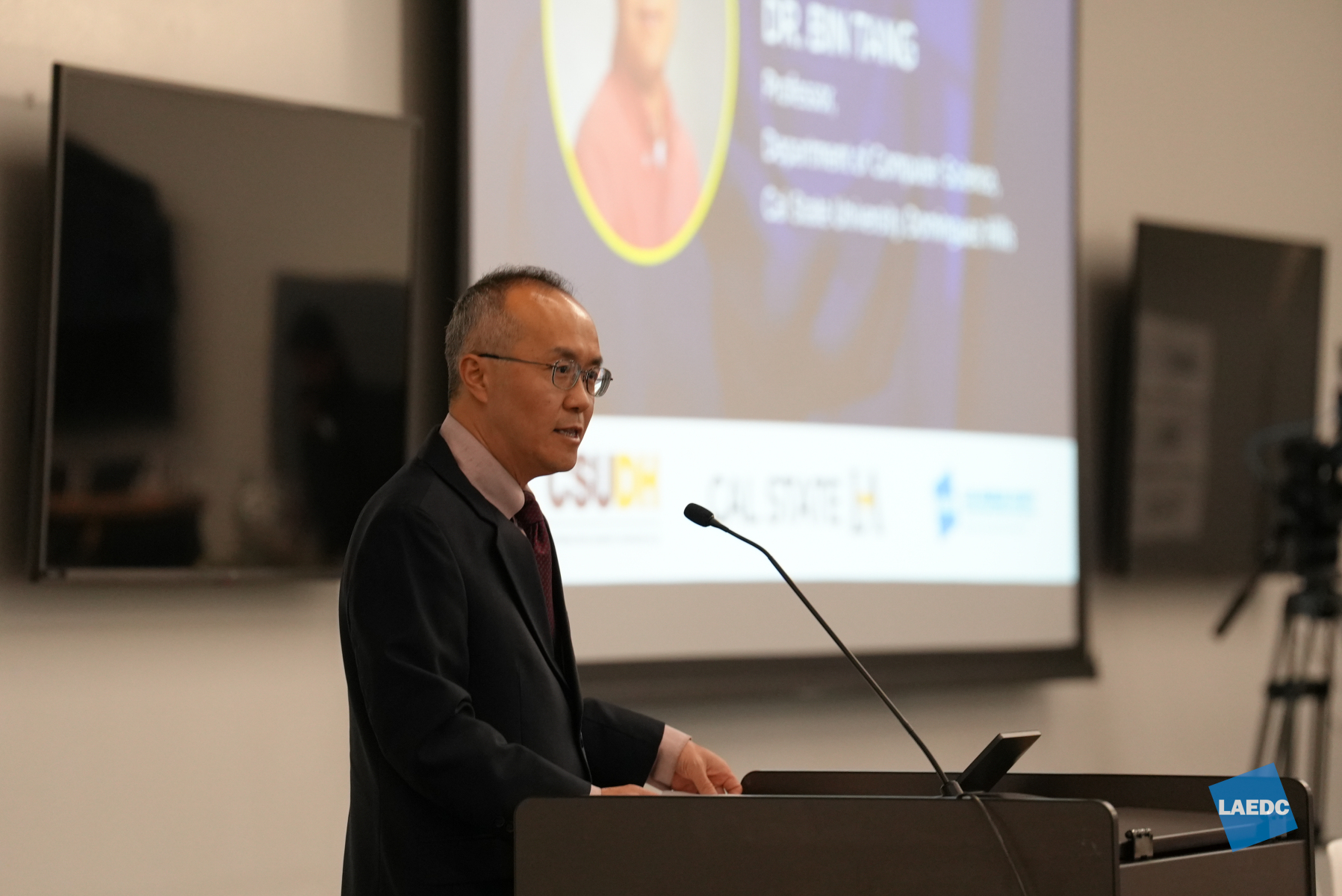
Moderator:
Dr. Bin Tang
Professor, Department of Computer Science
Cal State University Dominguez Hills
Highlights
-
🎓 Dr. Thomas Parham emphasizes the balance between innovation and core human values in AI adoption.
-
⚖️ Concerns about misuse of AI in healthcare, including denial of care through biased algorithms.
-
🌍 Importance of purpose-built AI models tailored for diverse and underserved communities.
-
📚 Education is imperative to integrate AI literacy and critical thinking into healthcare training.
-
🔄 Closing remarks stress equity, innovation, and economic development as intertwined goals for LA’s AI-driven healthcare future.
Insights
🤝 Equity must be foundational, not an afterthought, in AI healthcare innovation. The historical exclusion of marginalized populations from both healthcare and technological benefits risks widening disparities unless intentional inclusive strategies are embedded early in AI development and deployment. This demands workforce training, system design, and policy frameworks prioritizing equity.
⚖️ The duality of AI requires constant vigilance—while AI can accelerate problem-solving, improve access, and personalize care, it also risks ethical pitfalls like privacy violations, data misuse, and exacerbation of social inequities. Leaders must ensure that the means of AI implementation never outpace the ethical ends it seeks to serve, echoing Dr. Martin Luther King Jr.’s caution.
📉 The digital divide remains a significant barrier. For populations with limited access to technology—such as low-income, first-generation college students or underserved patients—the promise of AI is limited unless foundational socio-economic disparities are addressed. AI cannot substitute for basic access to devices, internet, or digital literacy.
🚀 Rapid AI innovation in healthcare is markedly accelerating, with an influx of AI tools geared toward diagnostics, workflow automation, and patient engagement. However, this speed poses challenges in evaluating safety, efficacy, and equitable impact, underscoring the need for rigorous clinical trials and unbiased validation before widespread adoption.
🔍 Responsible AI deployment demands inclusive design processes. Engaging end-users—patients, clinicians, and community representatives—in development ensures AI products meet real needs and avoid unintended consequences. This participatory approach is critical to overcoming siloed tech development that risks perpetuating bias and inefficiency.
⚕️ AI applications in behavioral and social health must grapple with unique challenges: predictive models may prioritize those likely to succeed, potentially neglecting individuals with complex, less “optimized” needs. Ethical AI must consider how to support those most vulnerable, rather than simply optimizing outcomes for the easiest cases.
🔄 AI is more likely to augment rather than replace healthcare jobs, particularly in clinical roles. Automation may reduce administrative burdens, allowing clinicians to focus on patient care. However, workforce development must evolve—teaching AI literacy, critical inquiry, and interdisciplinary collaboration to prepare future healthcare professionals to effectively partner with AI tools.
📈 The “human in the loop” model is essential but faces challenges. Studies show AI alone may outperform physicians plus AI, revealing a gap in how clinicians integrate AI insights. This highlights a critical need for education and training to optimize AI-human collaboration and realize AI’s full potential in improving diagnostic accuracy and patient outcomes.
🌱 Environmental considerations of AI deployment remain underexplored but critical. Data centers powering AI consume substantial energy, often impacting underserved communities environmentally and socially. Healthcare AI stakeholders must balance innovation with sustainability to avoid perpetuating environmental injustice.
🌐 The future of healthcare AI in Los Angeles hinges on integrating equity, innovation, and economic development. This requires ongoing collaboration across sectors, robust data hygiene practices, transparent evaluation, and policies that ensure AI tools serve the full diversity of the county’s population, including the 224 languages spoken locally.
Conclusion
This forum illuminated the transformative potential of AI in healthcare balanced against the profound responsibilities it entails. The conversation underscored that AI’s success depends not only on technological advances but on embedding equity, ethics, and inclusivity into every phase—from data collection to workforce preparation to clinical deployment. As AI reshapes healthcare, Los Angeles County’s multi-sector collaboration, commitment to rigorous evaluation, and focus on marginalized communities will be pivotal in shaping a future where AI truly enhances health outcomes for all.
Learn more or get involved: laedc.org