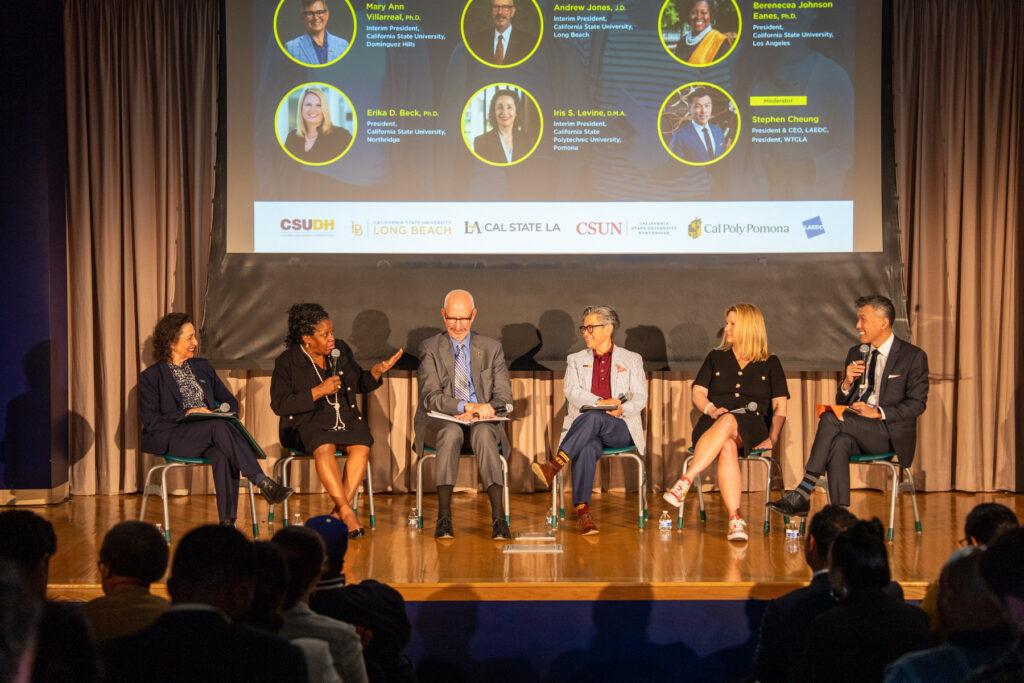
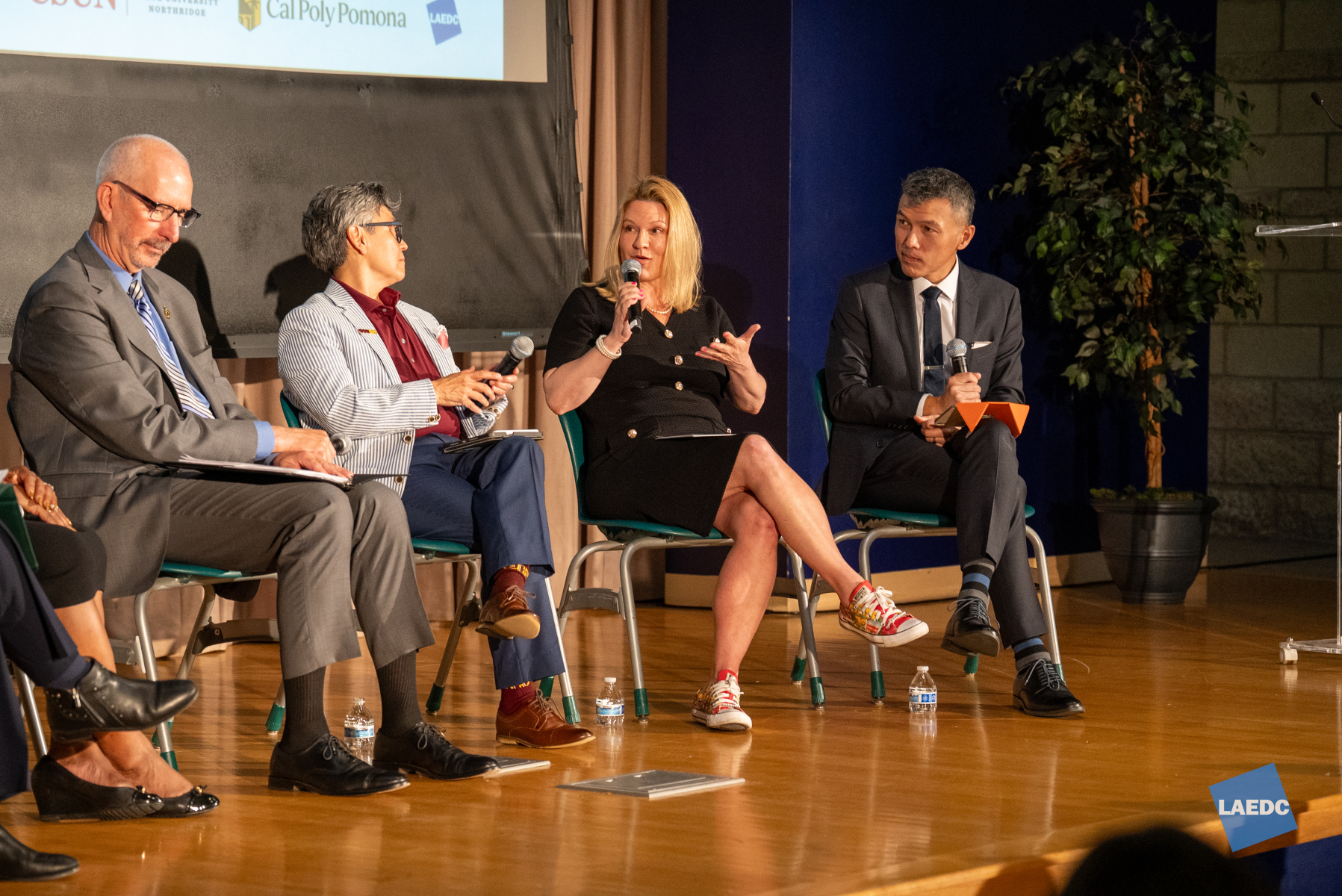
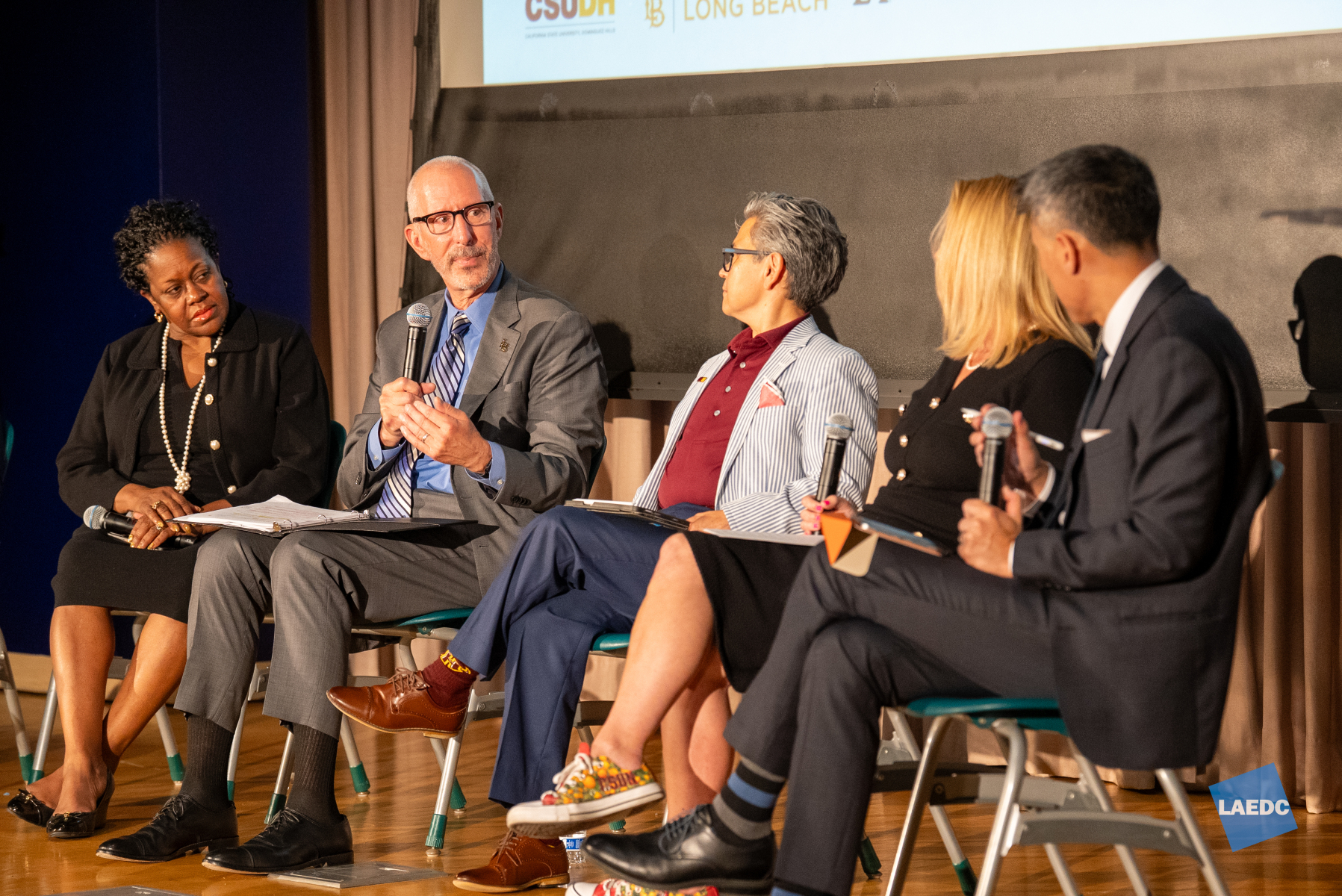
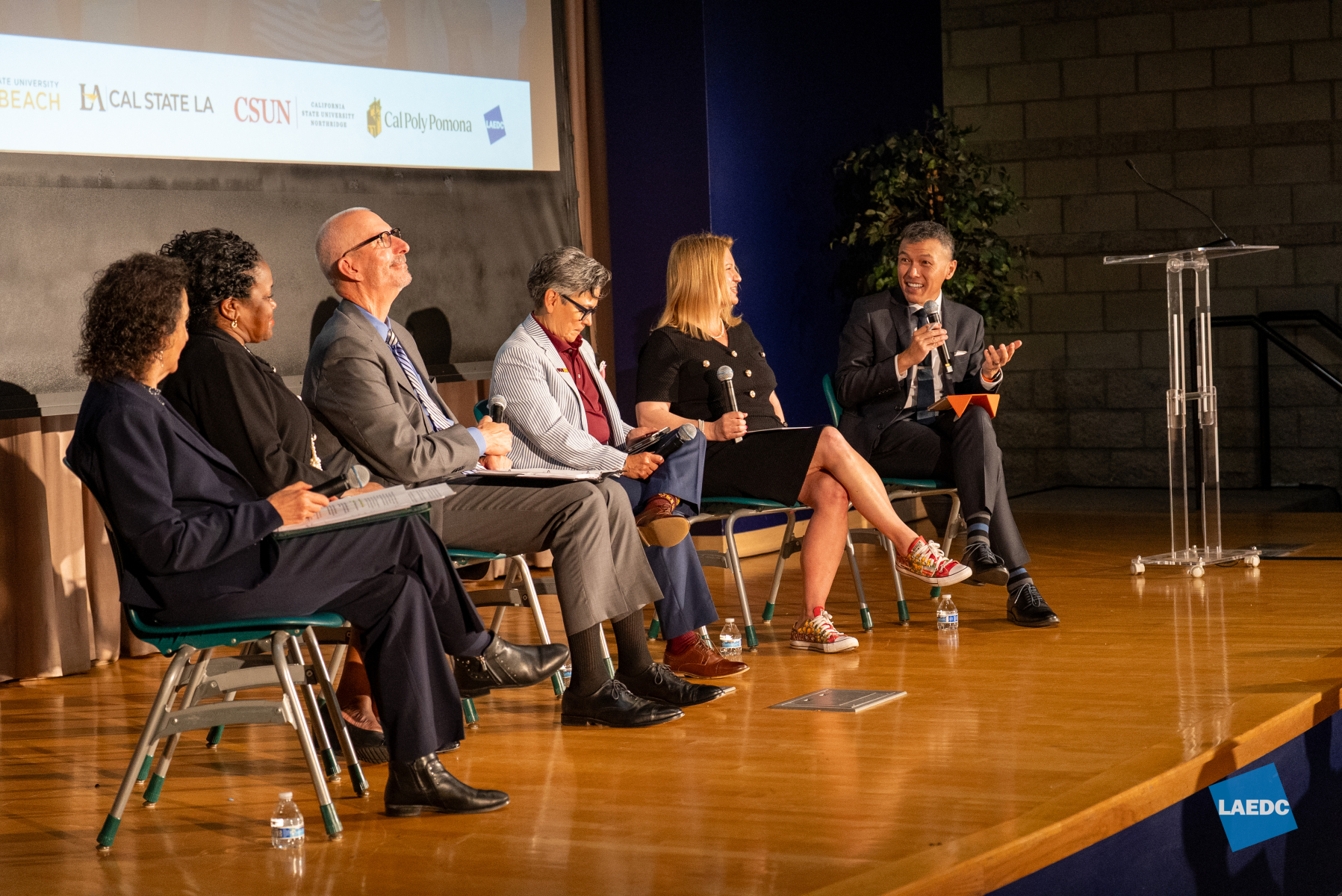
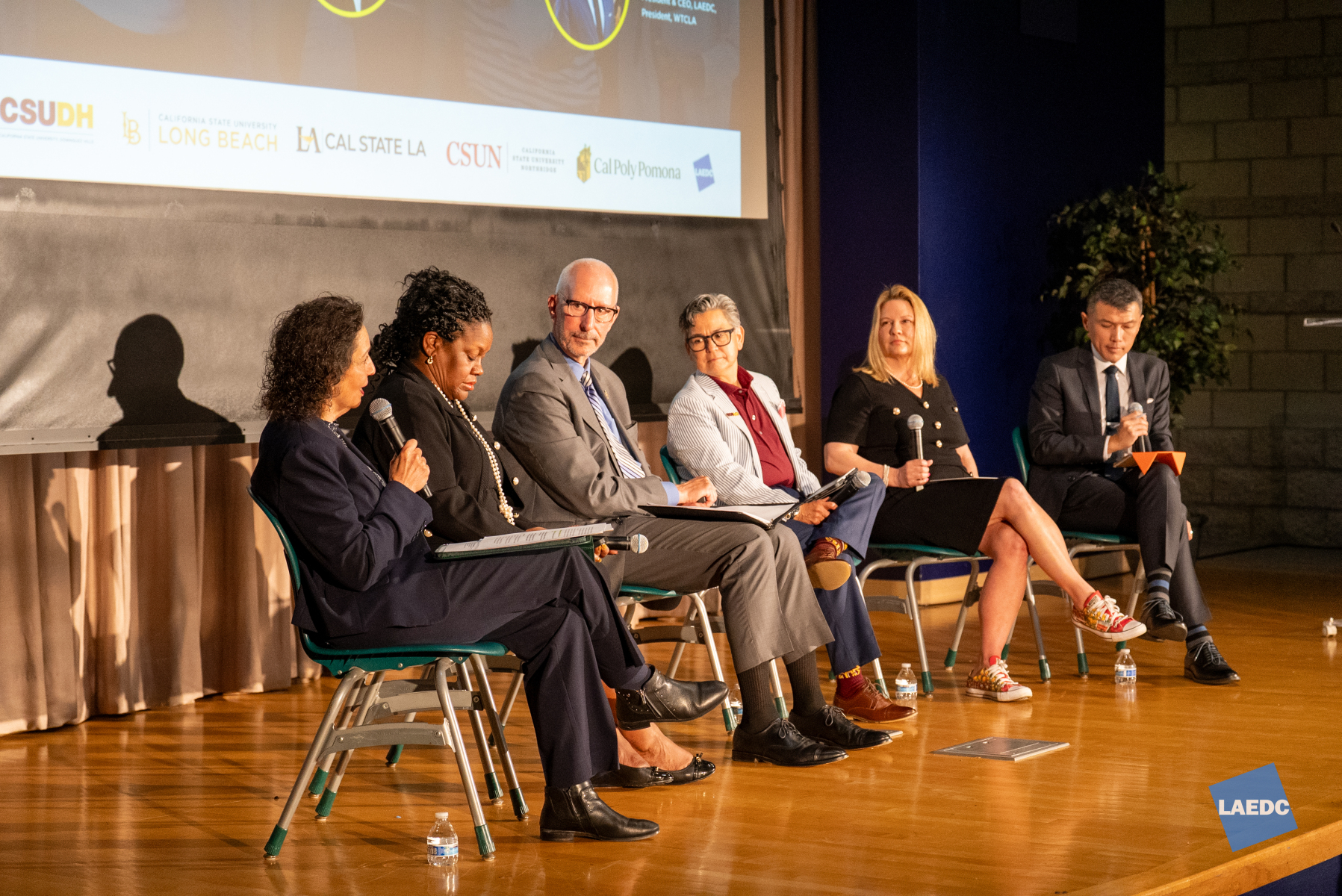
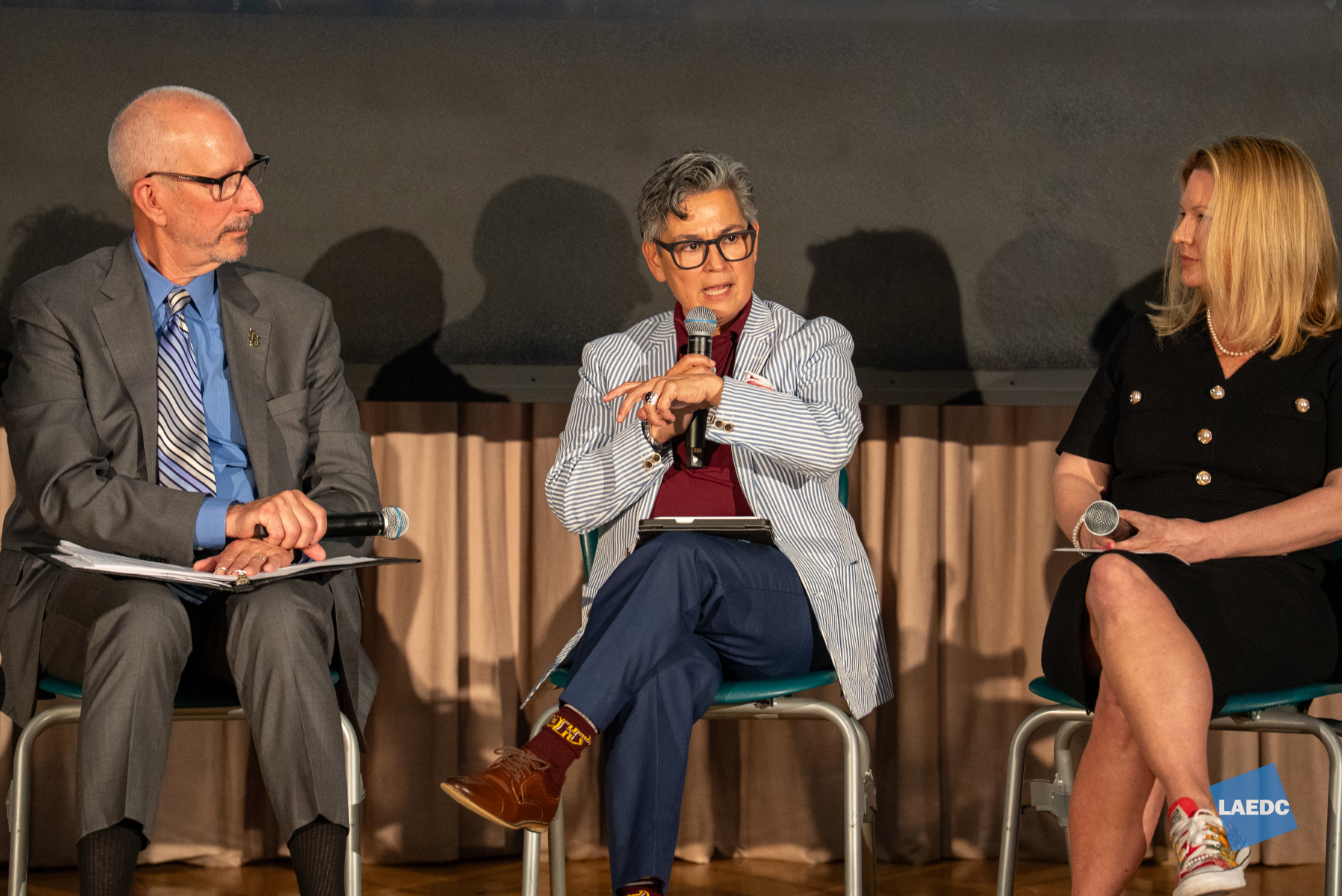
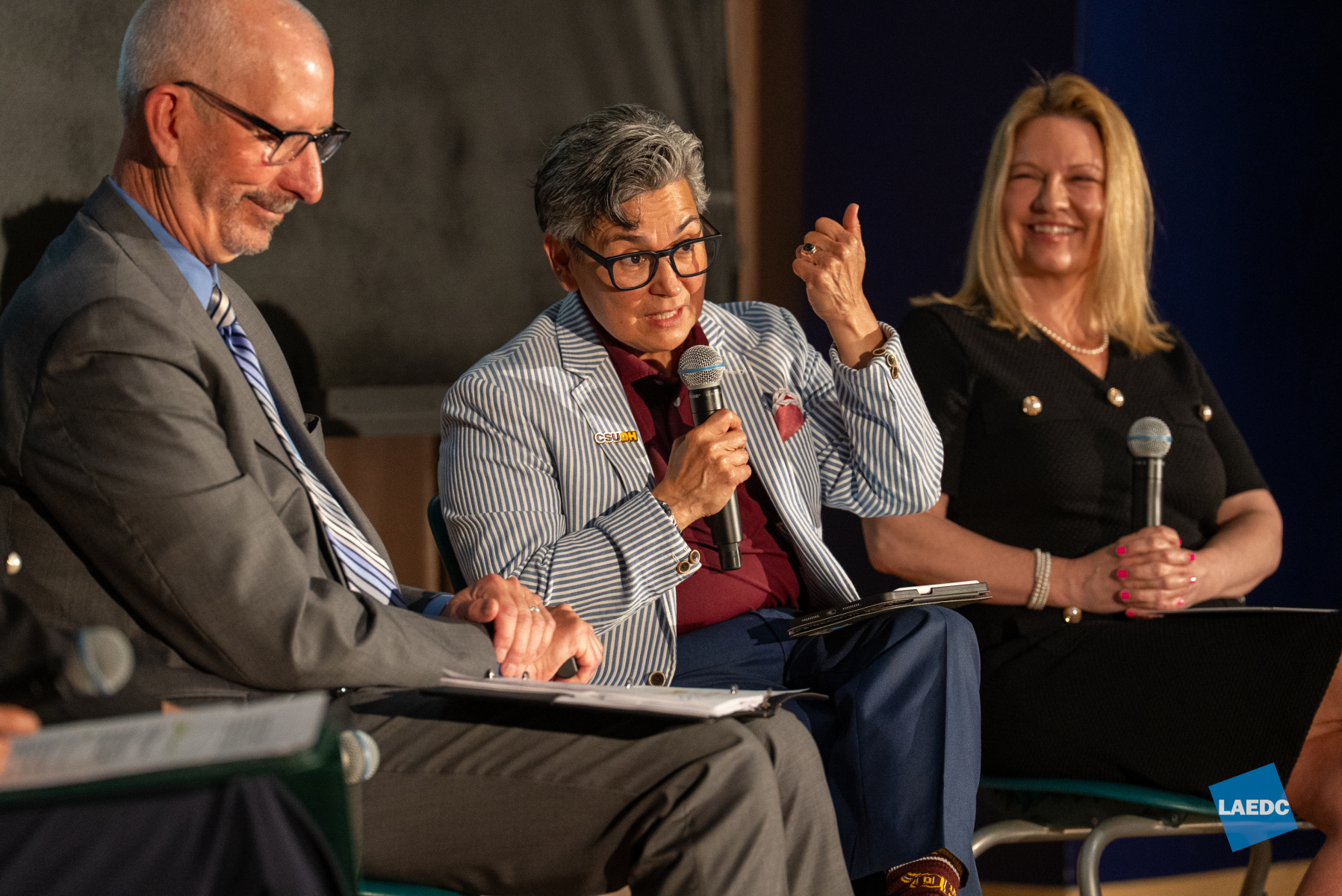
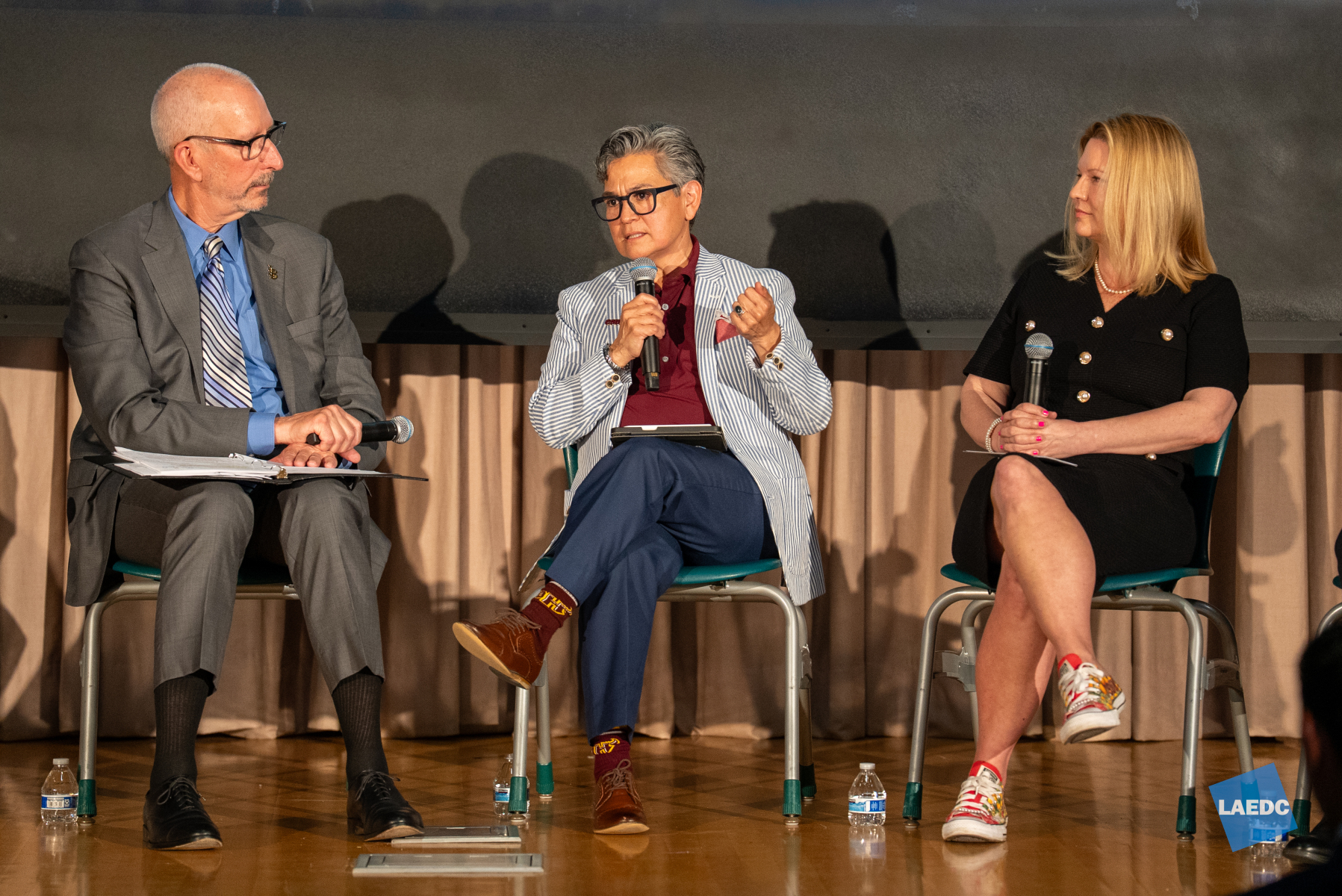
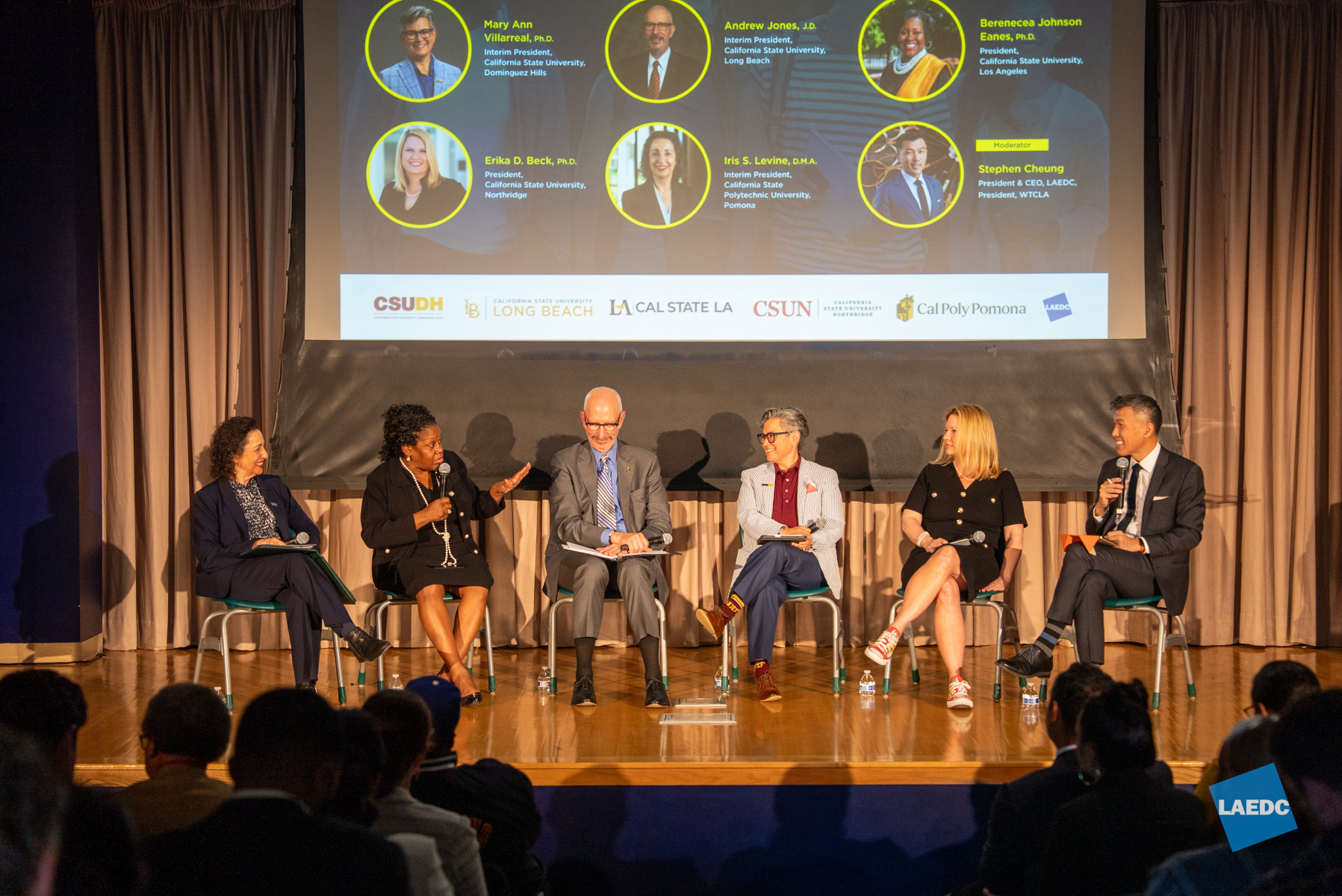
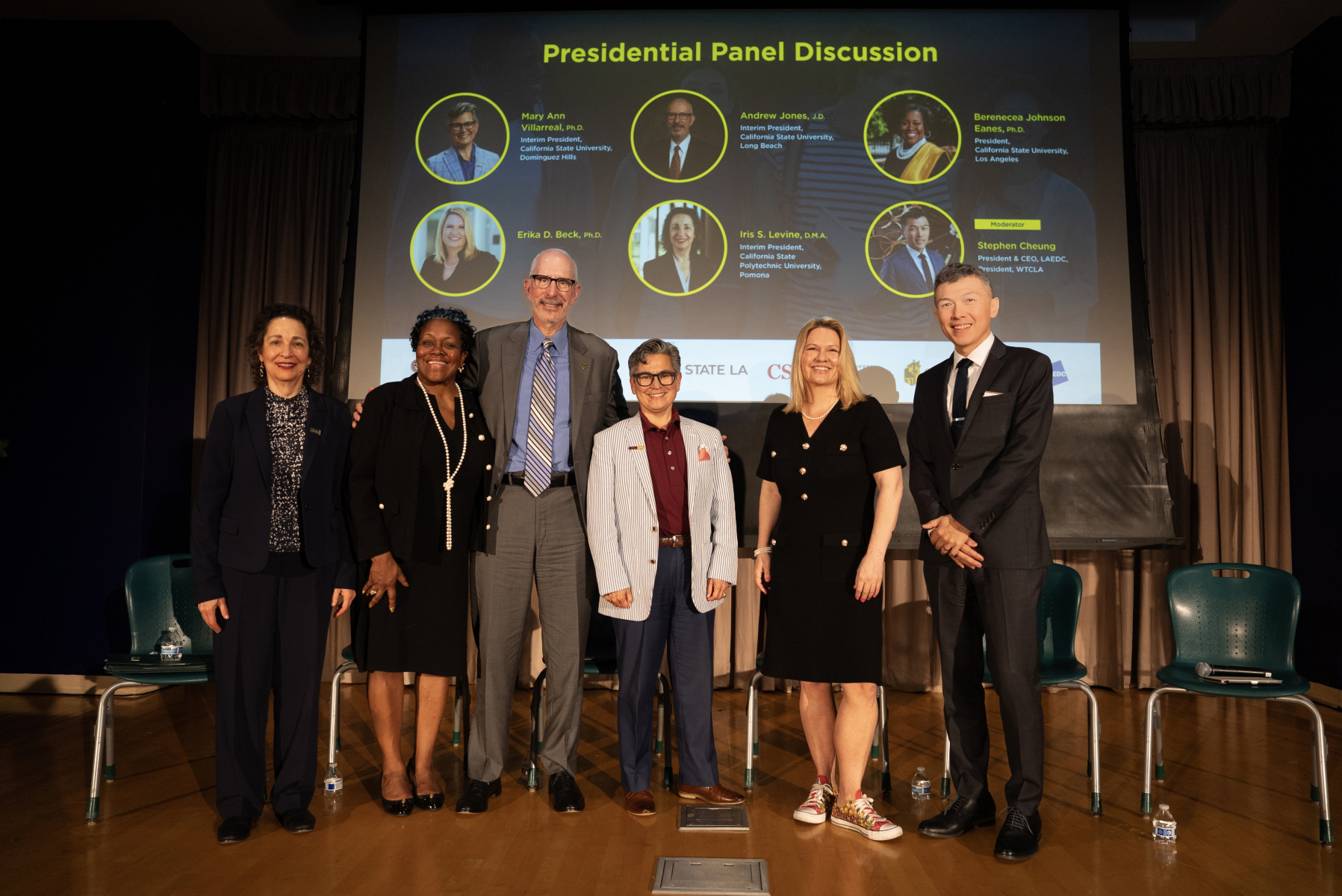
It all starts with talent—and in Los Angeles, that talent is already being built at scale. At the LAEDC Future Forum, leaders from the CSU system and across industry came together to examine how we better connect education to opportunity. The takeaway was clear: when we align our systems, we unlock the full potential of our region’s workforce and economy.
Speakers & Panel
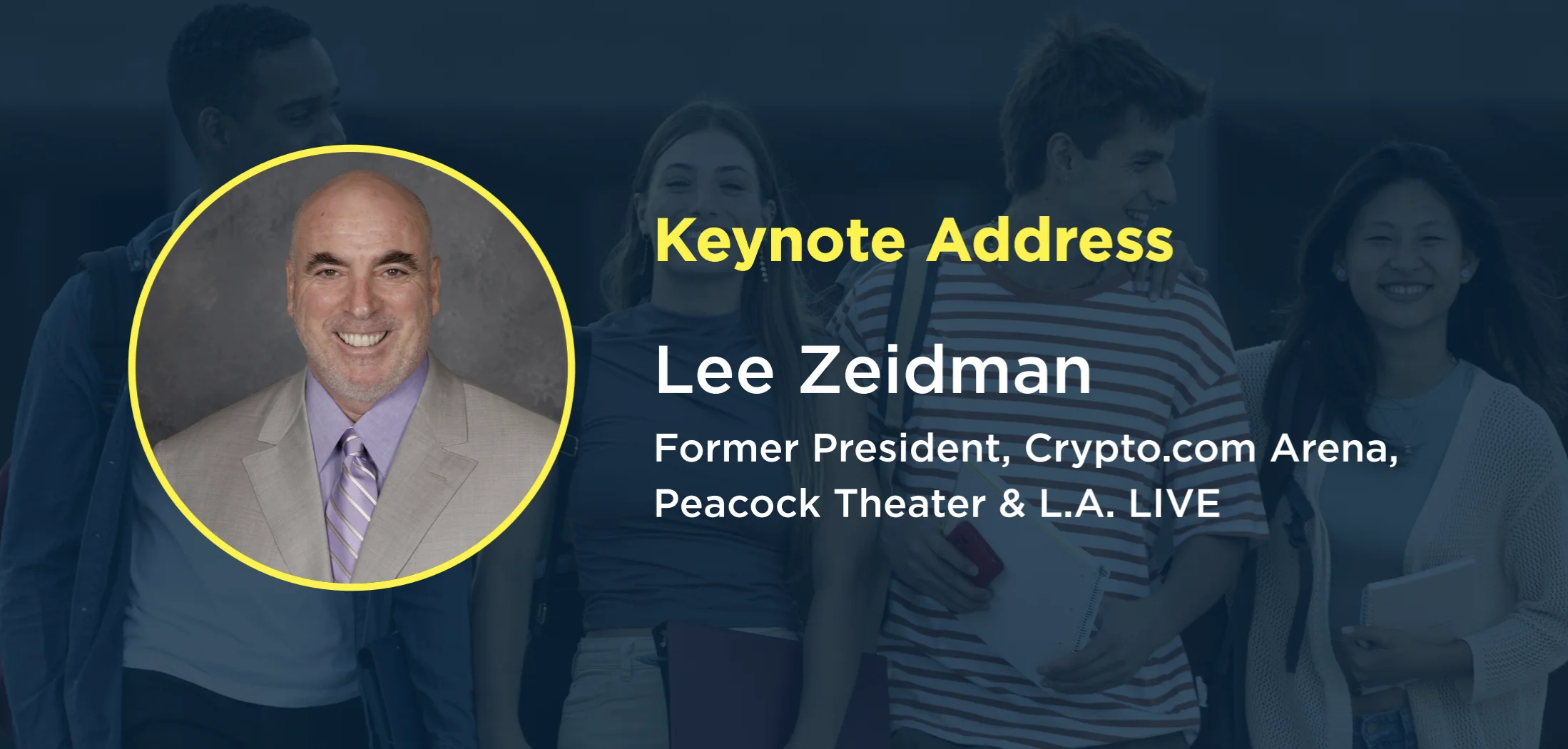
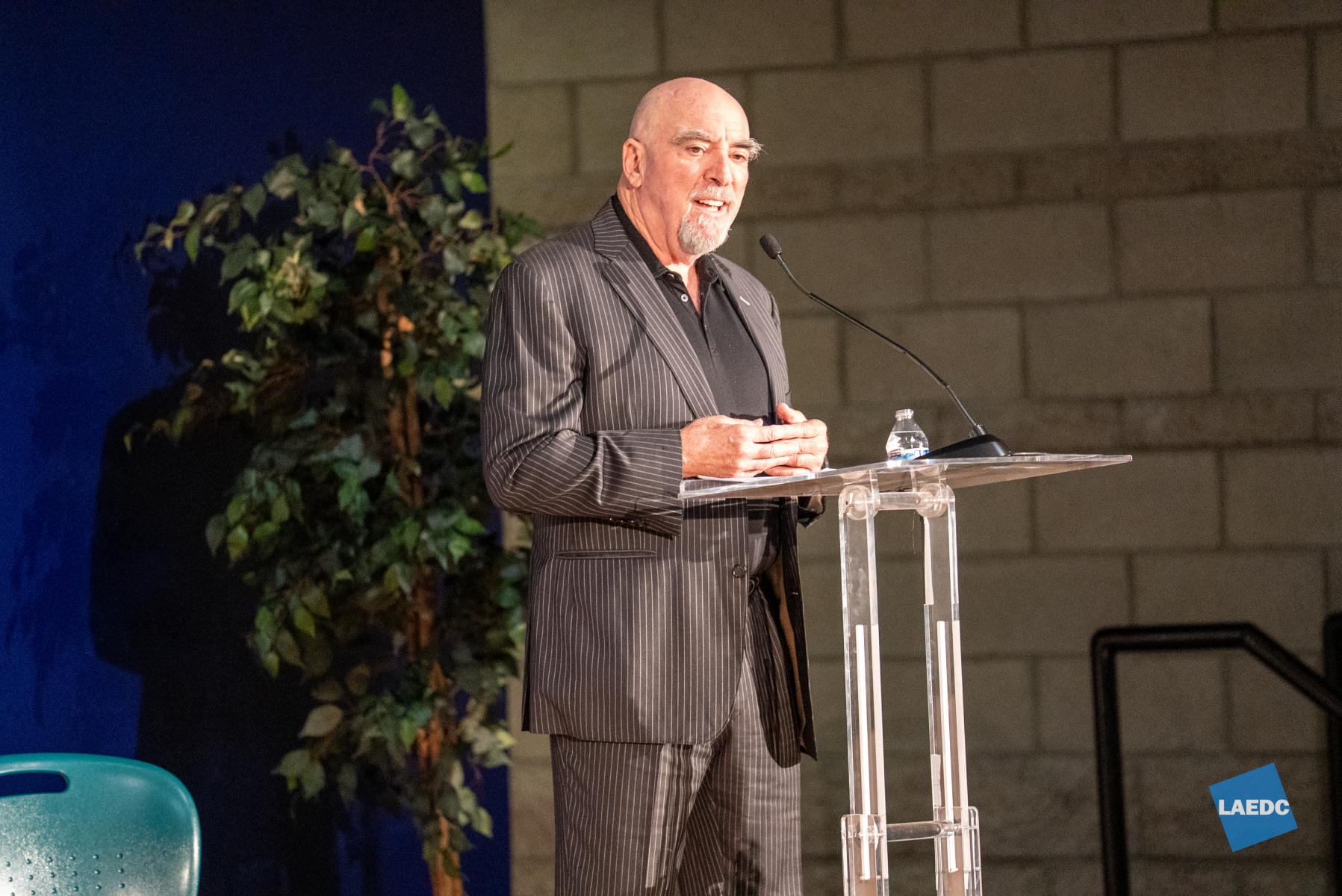
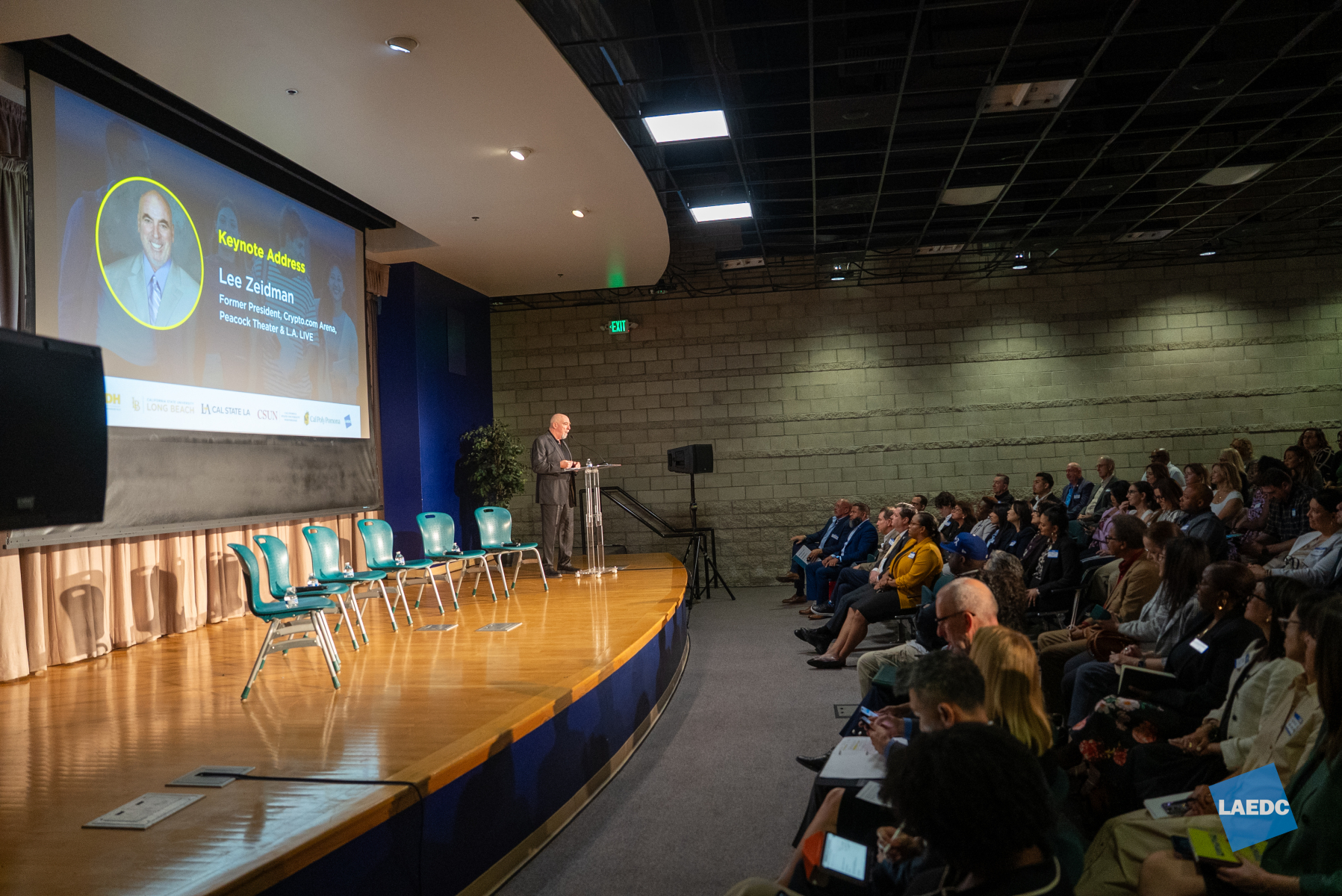
Keynote Speaker: Lee Zeidman – Former President, Crypto.com Arena, Peacock Theater & L.A. LIVE
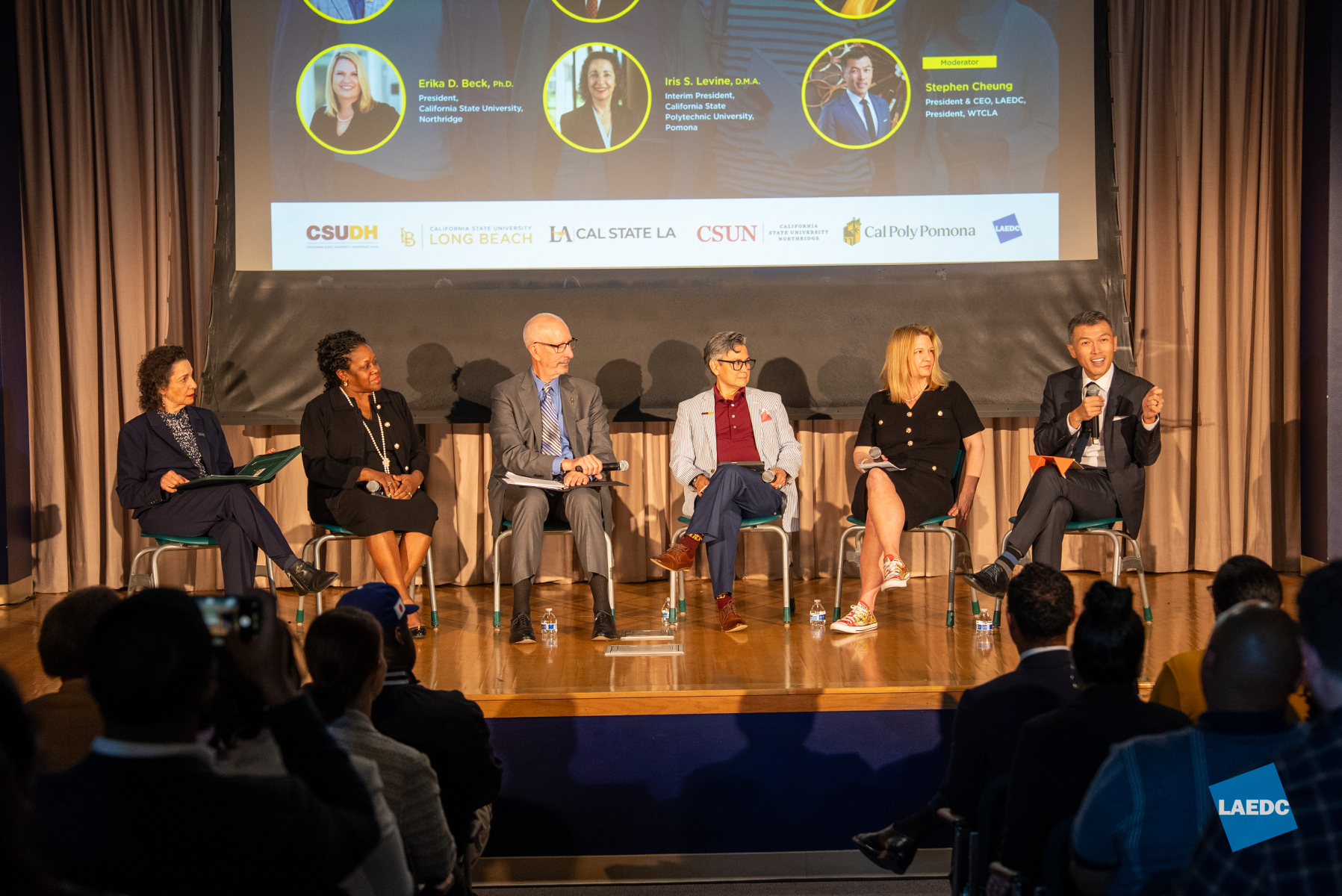
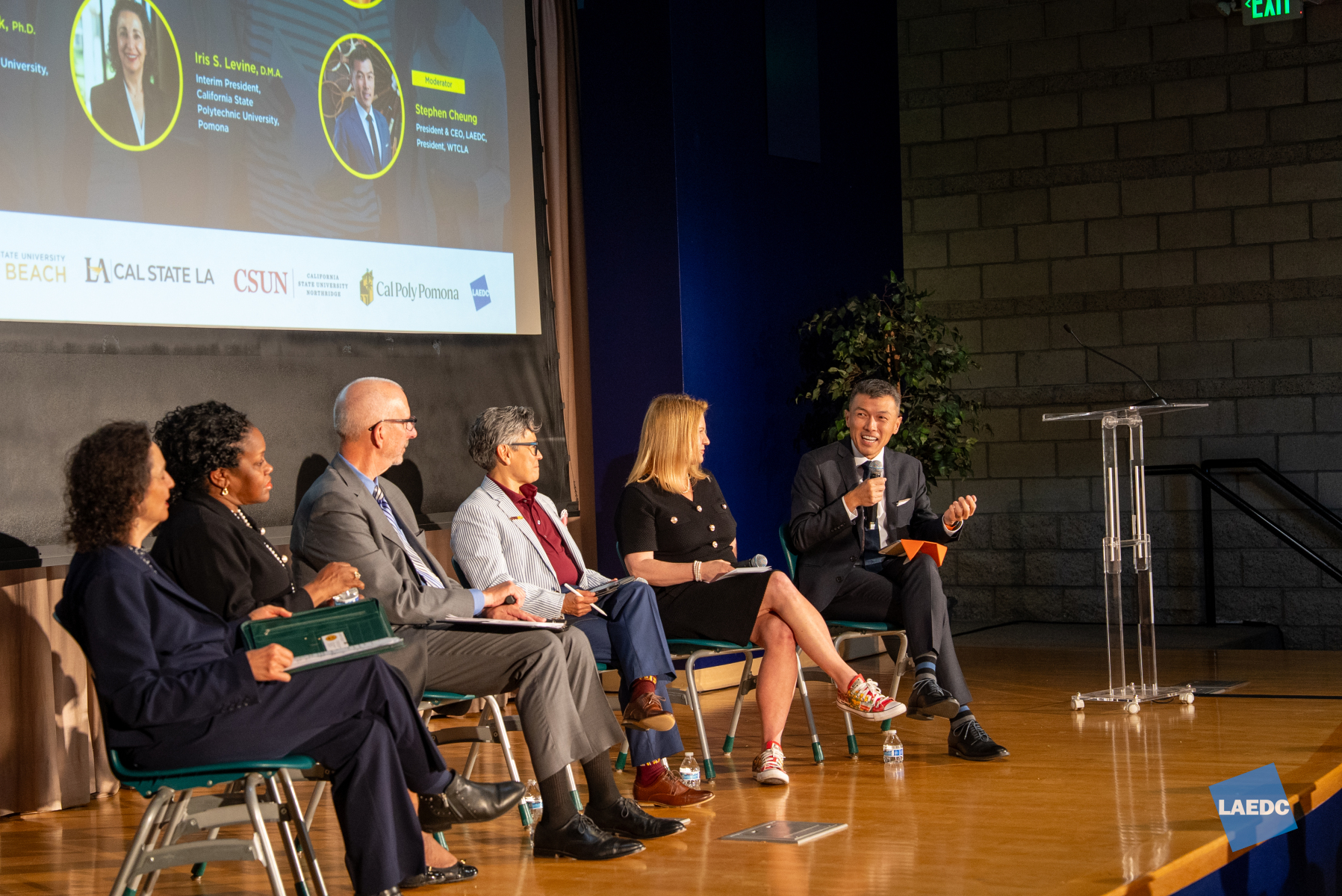
Panelist:
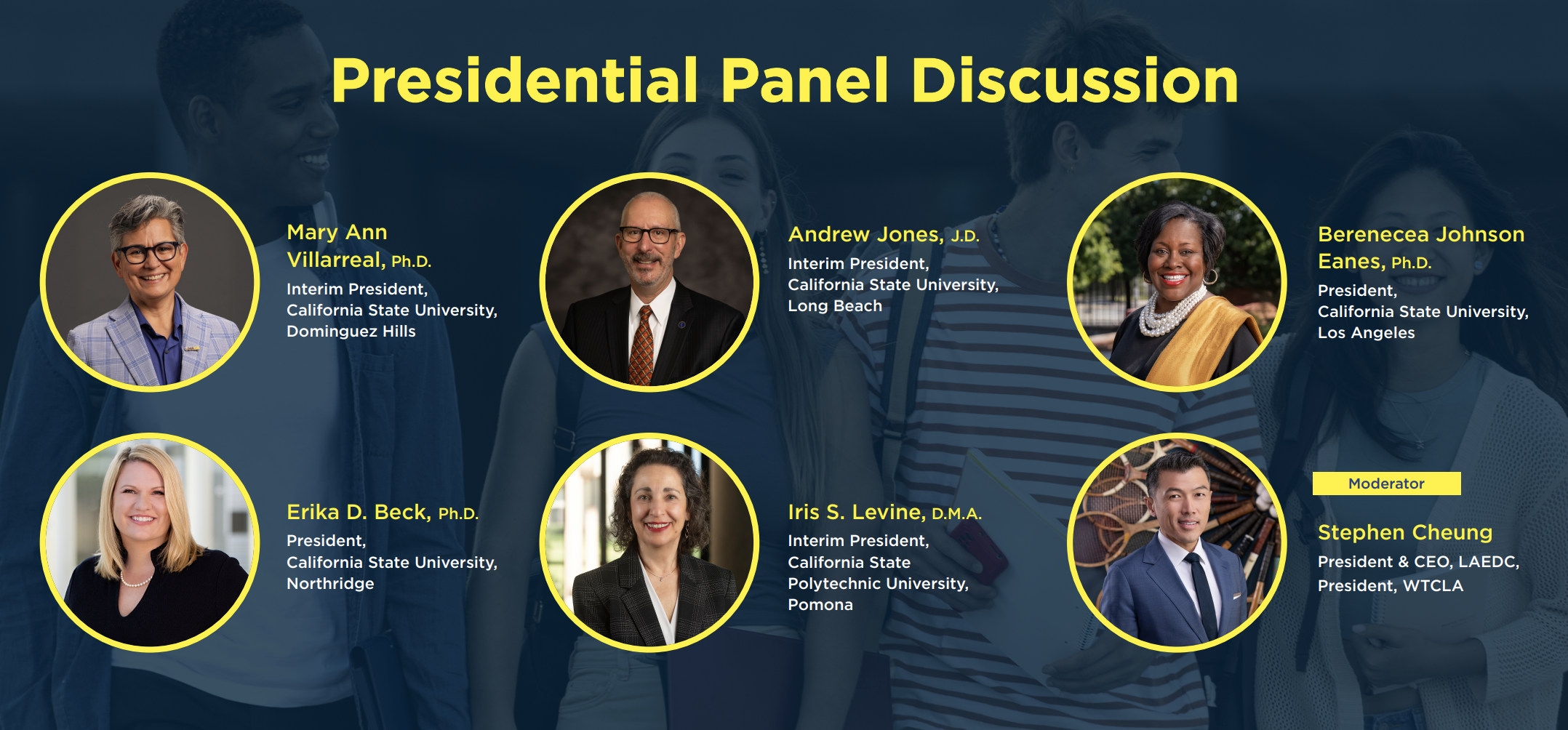
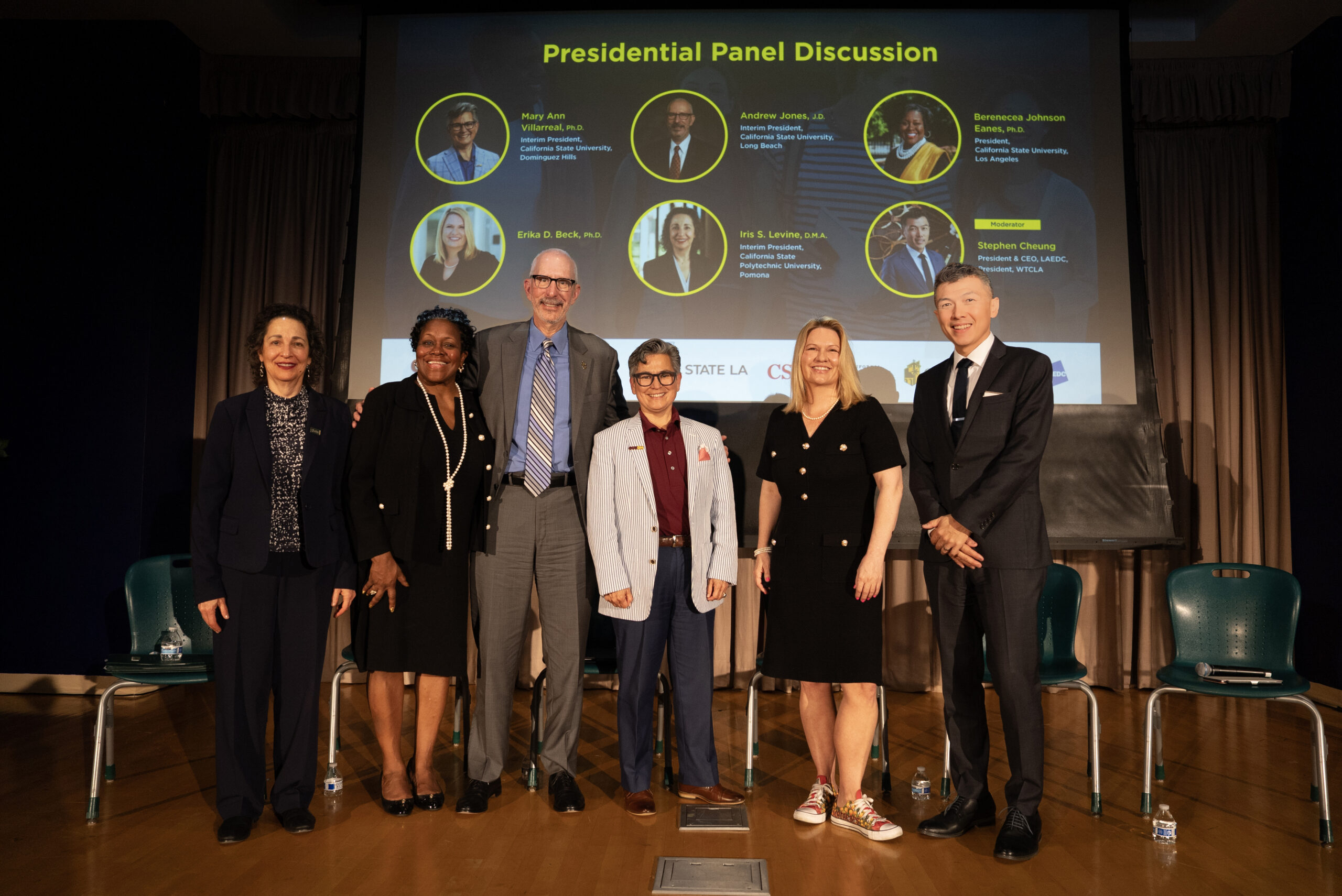
Mary Ann Villarreal, Ph.D. – Interim President, CSUDH Andrew Jones, J.D. – Interim President, Cal State Long Beach Berenecea Johnson Eanes, Ph.D. – President, Cal State LA Erika D. Beck, Ph.D. – President, CSUN Iris S. Levine, D.M.A. – Interim President, Cal Poly Pomona
Moderator: Stephen Cheung, President & CEO, LAEDC
Highlights
The CSU Five collectively represent 50% of all college graduates in the region, producing the workforce that powers Los Angeles’ economy at scale.
Strong partnerships with industries (aerospace, healthcare, logistics, tech) are actively shaping curriculum to ensure students are job-ready on day one.
Hands-on training—rocket labs, AI integration, smart manufacturing, finance simulations—ensures students are learning by doing, not just theory.
CSU campuses are driving social mobility, especially for first-generation and Pell-eligible students, often lifting entire families—not just individuals—into new economic realities.
While impact is massive, a fully coordinated regional strategy (education → workforce → industry) is still developing and represents a major opportunity.
Insights
Students Need Career Clarity Earlier Many students are unaware of high-demand industries (aerospace, logistics, healthcare), despite programs existing to support them.
AI is a Tool, Not a Threat Universities are positioning AI as an enhancer of human capability—not a replacement.
Experiential Learning Drives Confidence Programs like Finance Park and simulation-based learning help students see themselves in future careers early.
Soft Skills Are Just as Critical as Technical Skills “Emotional agility,” adaptability, and communication are becoming essential workforce traits.
Industry Wants Work-Ready, Not Just Degree-Ready Employers are prioritizing applied skills and real-world experience over credentials alone.
Internships Are Not Enough The biggest gap is transitioning students from internships to first career jobs.
Economic Impact is Under-Recognized Universities aren’t just educators—they are major economic drivers and employers.
First-Gen Students Carry Broader Responsibility Many students are not just advancing themselves—they are lifting entire families and communities.
Networking Still Beats Resume Submissions Direct connections, informational interviews, and industry exposure are far more effective than cold applications.
Conclusion
This conversation highlighted an important opportunity: Los Angeles has a strong and growing talent pipeline, with room to further strengthen how systems connect and collaborate.
The CSU system is already producing skilled, diverse, and capable graduates at scale, while industry continues to seek that talent. The next step is deepening alignment—bringing education, workforce systems, and employers even closer together to create a more seamless pathway.
With that continued coordination, Los Angeles is not only preparing for the future economy—it’s well positioned to help lead it.